Before Treatment Begins
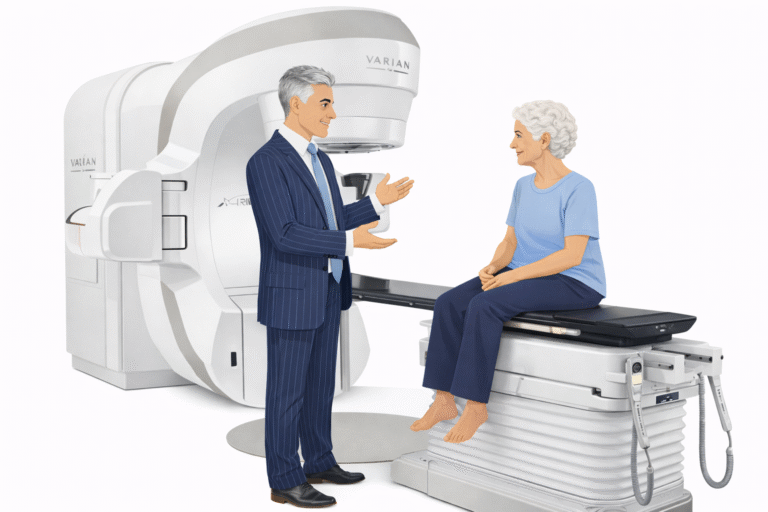
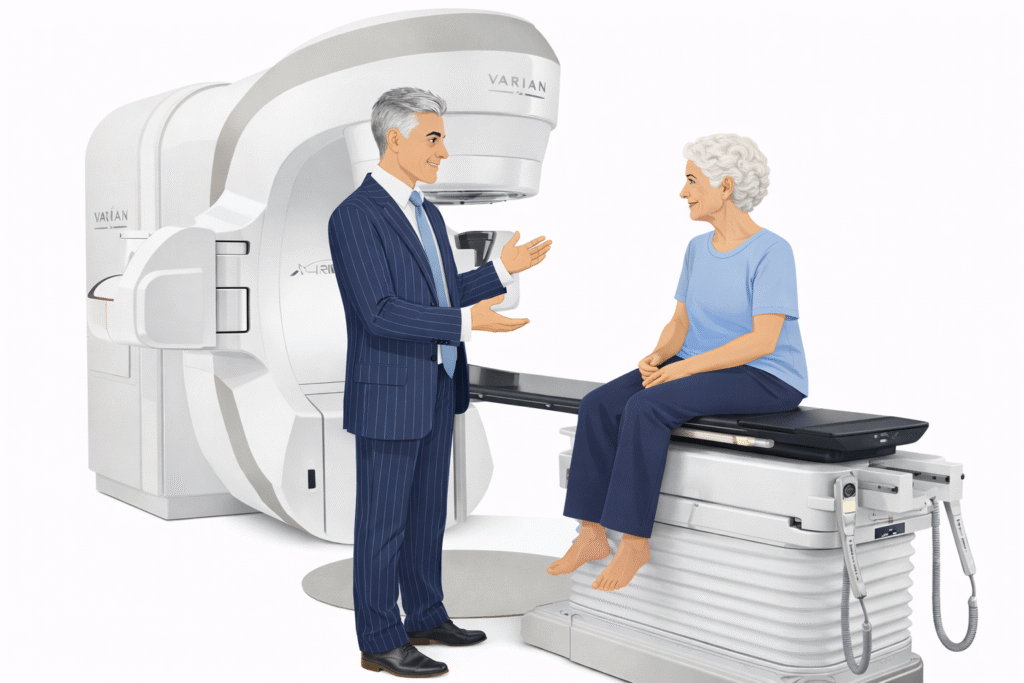
Low-dose radiotherapy is considered for people with persistent osteoarthritis where pain and stiffness continue despite appropriate conservative treatment. Before proceeding, the first step is a consultation with a radiation oncologist to make sure the symptoms are likely to be coming from the affected joint and that radiotherapy is a reasonable option.
The assessment usually includes a review of the pattern and duration of pain, previous treatments, relevant imaging and how much the joint is affecting everyday activities. Age and the anatomical area being treated are also important because they influence the balance between potential benefit and the small long-term risks associated with radiation.
If treatment is appropriate, a radiotherapy planning appointment is organised. This allows the treatment team to identify the affected joint accurately and design a treatment field that includes the relevant joint and surrounding tissues while limiting unnecessary radiation exposure elsewhere.
What Happens During the Six Treatments?
At Pinpoint Radiotherapy, osteoarthritis is typically treated with six low-dose radiotherapy sessions, usually delivered on alternate days over approximately two to three weeks.
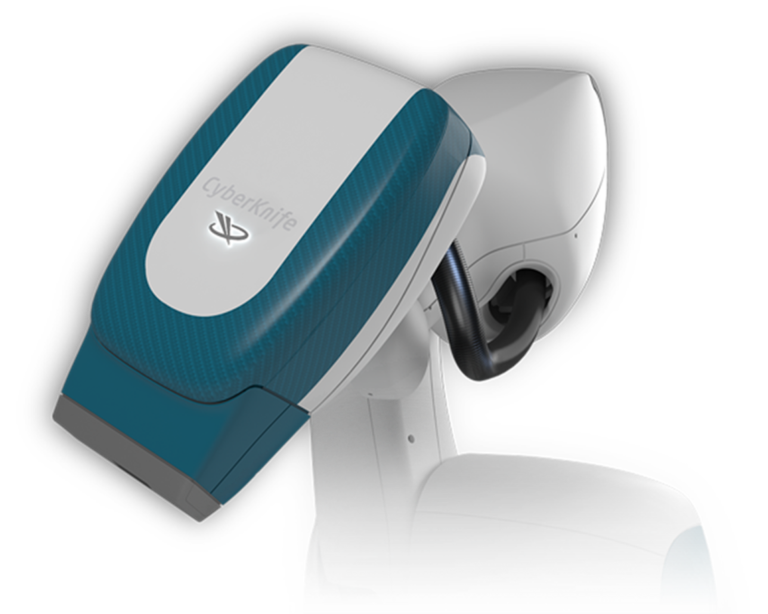
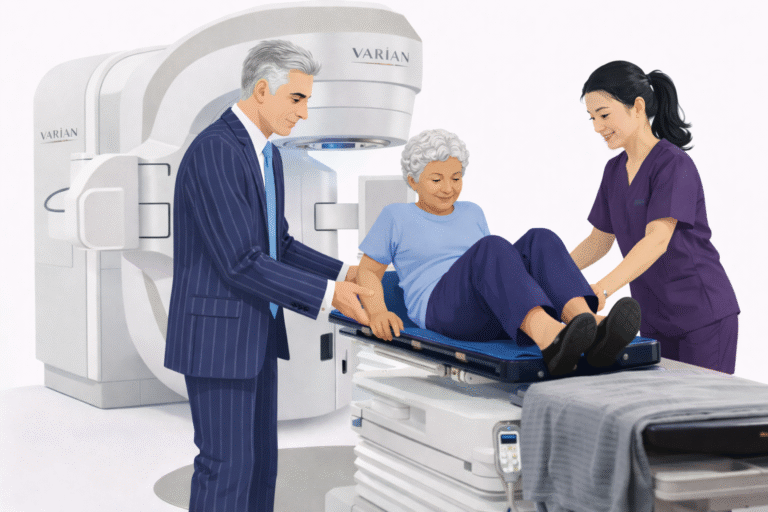
The treatment itself is simple and non-invasive. Patients are positioned comfortably on the treatment machine in the same way for each session, and the radiation is directed towards the affected joint according to the treatment plan. There are no needles, injections or anaesthetic, and the radiation cannot be seen or felt.
Each treatment appointment is relatively short and there is no recovery period afterwards. Patients are not radioactive following treatment and can return to their normal activities straight away. Most people continue working, exercising within their usual limits and carrying on with day-to-day life throughout the course.
The radiation dose used for osteoarthritis is far lower than that used for cancer treatment, so significant acute side effects are uncommon. Some patients may notice temporary fluctuations in pain or local symptoms, but treatment is generally very well tolerated.
When Should You Expect Improvement?
Low-dose radiotherapy does not work like an injection or painkiller, so improvement does not necessarily occur immediately.
The treatment is thought to influence inflammatory activity within and around the joint, and this process can take time. Some patients begin to notice an improvement during the treatment course or within the first few weeks, while others find that pain, stiffness and mobility continue to improve gradually over several months.
For this reason, an early lack of improvement does not necessarily mean the treatment has been unsuccessful. It is usually more useful to assess the overall response after sufficient time has passed for the anti-inflammatory effect to develop.
The degree of improvement also varies. Some patients experience a substantial reduction in pain, others notice a more modest but worthwhile change, and some unfortunately do not respond. Low-dose radiotherapy does not regenerate cartilage or reverse the structural changes of osteoarthritis, so the aim is to improve symptoms and function rather than cure the underlying condition.
Where there has been a clear but incomplete response, a second treatment course may sometimes be considered after approximately three months. If there has been no meaningful response, the joint and the cause of the ongoing symptoms should be reconsidered rather than automatically repeating treatment.
Follow-Up at Pinpoint Radiotherapy
At Pinpoint Radiotherapy, treatment is followed by planned review rather than simply completing the six sessions and waiting indefinitely to see what happens.
The response is assessed over the following weeks and months, looking not only at pain scores but also at practical changes such as walking, sleep, stiffness, exercise and the ability to perform everyday activities. This helps determine whether the treatment has produced a meaningful benefit and whether any further treatment should be considered.
Low-dose radiotherapy can also sit alongside the broader management of osteoarthritis. Patients can continue appropriate exercise, physiotherapy, medications and other treatments, and receiving low-dose radiotherapy does not prevent injections or surgery from being considered later if required.
The aim at Pinpoint Radiotherapy is to make the process straightforward and realistic: careful assessment before treatment, a short six-session course, and enough follow-up afterwards to judge the response properly.
Evidence and further reading
Dove A, Koneru B, Small W Jr, et al. American Radium Society Appropriate Use Criteria for Low-Dose Radiotherapy for Treatment of Osteoarthritis. Am J Clin Oncol. 2026. PubMed
Steike DR, Seegenschmiedt MH, Shaffer R, et al. Three-Dimensional Radiation Therapy Target Volume Definitions for Osteoarthritis. Consensus Statement of the International Benign Target Volume Group. Int J Radiat Oncol Biol Phys. 2026. PubMed
Koneru BN, Sick J, Shaikh HA, et al. Low-Dose Radiation Therapy for Osteoarthritis: A Retrospective Single-Institution Analysis of 69 Patients and 168 Joints. Int J Radiat Oncol Biol Phys. 2025. PubMed