Can Prostate Cancer Really Be Treated in Five Sessions?
For many men with localised prostate cancer, radiation therapy no longer necessarily means attending treatment every weekday for several weeks.
Stereotactic Ablative Body Radiotherapy (SABR) allows selected prostate cancers to be treated using just five highly focused radiation treatments.
This approach has now been studied in large international clinical trials, including the landmark PACE-B trial.
PACE-B has provided important long-term evidence that five-treatment prostate SABR can achieve excellent cancer control in appropriately selected men with localised prostate cancer.
It has also provided an interesting insight into something less commonly examined in radiotherapy trials. A substantial proportion of men receiving SABR in PACE-B were treated using CyberKnife, while others were treated using conventional linear accelerators.
This gives us useful information not only about five-treatment prostate SABR, but also about different ways in which this treatment can be delivered.
What Is Prostate SABR?
SABR delivers a higher dose of radiation during each treatment than conventional radiotherapy.
Because each treatment delivers more radiation, the entire course can be completed in substantially fewer sessions.
For prostate cancer, one commonly used schedule is 36.25 Gy delivered over five treatments.
Despite the shorter treatment course, considerable precision is required.
The prostate is surrounded by structures that we want to protect, particularly the rectum, bladder and urethra. The prostate can also move during treatment because of changes in the bladder, rectum and other internal movement.
Modern prostate SABR therefore combines highly conformal radiation planning with image guidance and strategies for managing prostate motion.
What Was the PACE-B Trial?
PACE-B was a large international phase III randomised clinical trial investigating SABR for localised prostate cancer.
The trial enrolled 874 men with low or intermediate-risk prostate cancer.
Participants were randomly assigned to either conventional or moderately hypofractionated radiotherapy delivered over 20 or 39 treatments, or SABR delivered in just five treatments.
Hormone therapy was not permitted in the trial.
The major question was straightforward.
Could five-treatment SABR control prostate cancer as effectively as the longer established radiation schedules?
What Did PACE-B Show?
The long-term results were reassuring.
After a median follow-up of more than six years, 95.8% of men treated with SABR were free from biochemical or clinical failure at five years, compared with 94.6% of men receiving the longer radiation schedules.
The trial demonstrated that five-fraction SABR was non-inferior to conventional or moderately hypofractionated radiotherapy for cancer control in the population studied.
This represents an important development in the way radiation therapy can be delivered for selected men with localised prostate cancer.
Instead of several weeks of treatment, a complete course can potentially be delivered in five sessions.
Where Does CyberKnife Fit In?
SABR describes how radiation is delivered, rather than a particular machine.
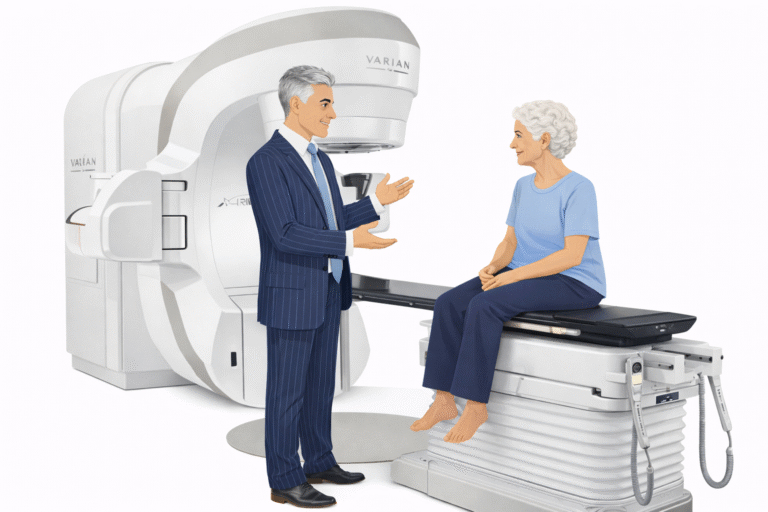
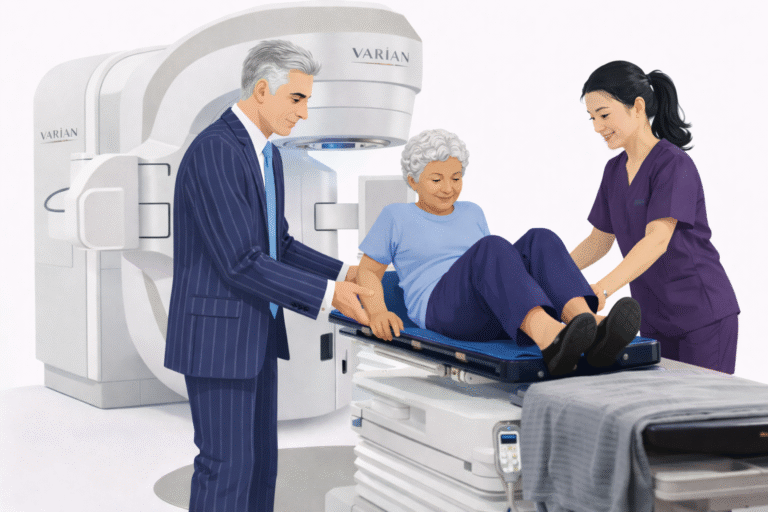
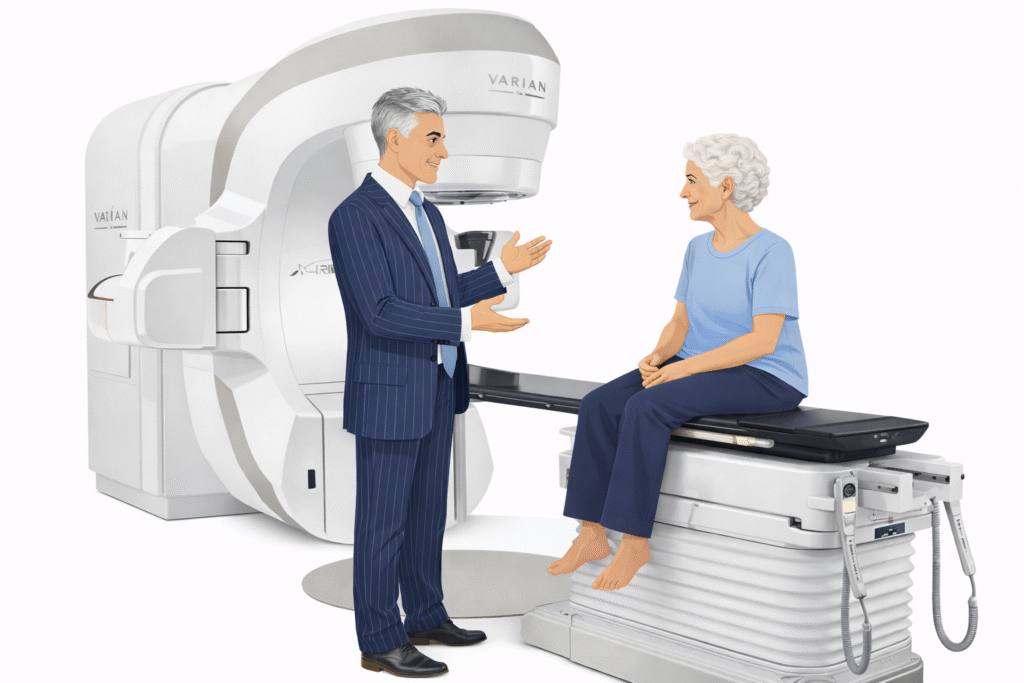
Prostate SABR can be delivered using several different radiotherapy platforms.
Within PACE-B, SABR was delivered using both CyberKnife robotic stereotactic radiotherapy and conventional linear accelerators.
Of the 414 patients who received SABR in the two-year treatment-platform analysis, 169 were treated using CyberKnife and 245 using conventional linac-based SABR.
This provided researchers with an opportunity to examine outcomes according to the technology used to deliver treatment.
Importantly, patients were not randomly assigned between CyberKnife and conventional linac SABR. The comparison between the two treatment platforms therefore needs to be interpreted cautiously.
What Makes CyberKnife Different?
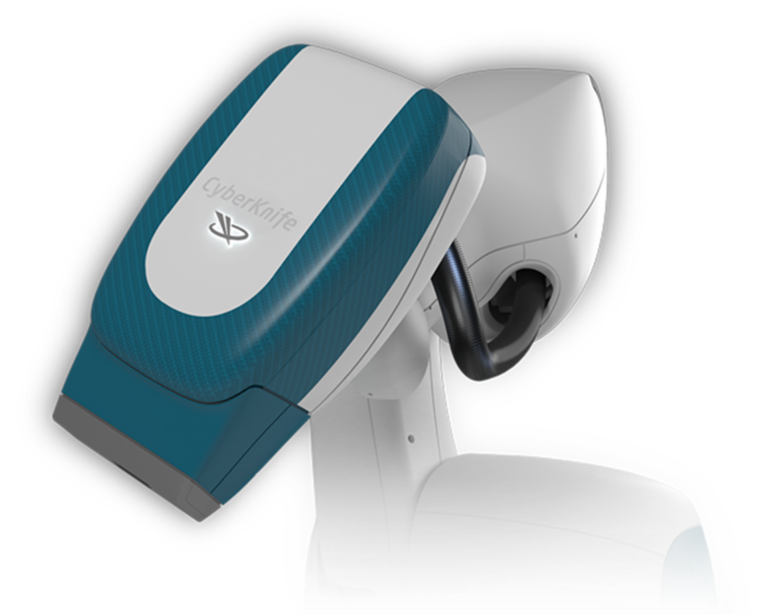
CyberKnife is a specialised stereotactic radiotherapy system.
Rather than using a conventional gantry rotating around the patient, CyberKnife uses a compact linear accelerator mounted on a computer-controlled robotic arm.
For prostate treatment, small fiducial markers are inserted into the prostate before radiotherapy.
During treatment, the CyberKnife system repeatedly takes X-ray images to identify these markers and determine the position of the prostate.
If the prostate moves, the system can account for changes in its position during treatment.
This is known as intrafraction tracking.
The distinction is important because positioning a patient accurately before treatment and monitoring the prostate throughout treatment are not necessarily the same thing.
The Prostate Does Not Stay Completely Still
The prostate can move during a radiation treatment.
Changes in rectal filling, bladder filling and internal anatomy can cause its position to change even after the patient has initially been aligned for treatment.
This is particularly relevant to SABR because each treatment delivers a relatively high radiation dose.
CyberKnife uses implanted fiducials and repeated imaging to monitor prostate position during treatment.
The robotic treatment system can then account for changes in the position of the target while treatment is being delivered.
Other modern radiotherapy platforms can also incorporate sophisticated image guidance and motion-management techniques, and these technologies continue to evolve.
CyberKnife is therefore not required to deliver high-quality prostate SABR.
Its combination of repeated imaging, intrafraction tracking and robotic radiation delivery represents one particular approach to delivering stereotactic treatment accurately.
What Did PACE-B Find About CyberKnife?
An interesting aspect of PACE-B was the opportunity to examine side effects according to the technology used to deliver SABR.
Overall, both CyberKnife and conventional linac-based SABR were associated with low rates of significant bowel and urinary side effects.
At two years, grade 2 or greater urinary toxicity was reported in approximately 6% of men treated using CyberKnife compared with 17% of men treated using conventional linac SABR.
Bowel side effects were low with both approaches.
This difference in urinary toxicity is interesting, but there is an important limitation.
Patients were not randomly assigned to CyberKnife or conventional linac treatment. They were treated using the technology available at their participating centre.
It is therefore not possible to conclude from PACE-B that CyberKnife itself was responsible for the observed difference.
There may be a number of treatment, patient or centre-related factors contributing to the finding.
What PACE-B does demonstrate is that CyberKnife was one of the major platforms successfully used to deliver five-treatment prostate SABR within a large international clinical trial, with encouraging cancer control and toxicity outcomes.
What About Side Effects?
Like every effective prostate cancer treatment, SABR can cause side effects.
These can include changes in urinary frequency or flow, bowel symptoms and changes in sexual function.
PACE-B now provides increasingly mature information about these outcomes.
At five years, patient-reported urinary incontinence outcomes were broadly similar between SABR and longer-course radiotherapy. More than 90% of men in both groups reported being pad-free, while moderate or significant bowel problems were uncommon.
Sexual function declined over time in both treatment groups.
Individual risk varies according to factors including baseline urinary function, prostate size, anatomy, medications and other patient characteristics.
These factors are considered when assessing whether prostate SABR is an appropriate treatment for an individual patient.
Is CyberKnife Better Than Conventional Prostate SABR?
PACE-B was not designed to answer that question.
The trial randomised men between five-fraction SABR and longer-course radiotherapy, rather than between CyberKnife and conventional linac SABR.
Both CyberKnife and modern conventional linear accelerators can deliver high-quality prostate SABR.
The lower urinary toxicity observed in the CyberKnife cohort is interesting, but because treatment platform was not randomised, it should not be interpreted as evidence that CyberKnife is superior to other methods of delivering prostate SABR.
For an individual patient, the important considerations are whether SABR is an appropriate treatment for their prostate cancer and whether it can be planned and delivered accurately with appropriate image guidance and management of prostate movement.
Who Might Be Suitable for Five-Treatment Prostate SABR?
PACE-B primarily studied men with low and intermediate-risk localised prostate cancer.
SABR is now an established treatment option for appropriately selected men within these groups.
Suitability is not determined by risk group alone.
Assessment can include:
PSA level
Gleason score and Grade Group
MRI findings
prostate size
baseline urinary symptoms
previous prostate procedures
anatomy of the prostate, bladder and rectum
other medical conditions
whether hormone therapy forms part of the broader treatment strategy.
Evidence for SABR is also developing in other prostate cancer settings, but treatment should be individualised rather than assuming that a five-treatment schedule is appropriate for every patient.
What Happens Before Prostate SABR?
Before treatment begins, detailed planning is required.
For CyberKnife treatment, small fiducial markers are placed within the prostate. These provide reference points that allow the position of the prostate to be identified during treatment.
A planning CT scan is then performed, often together with MRI information, to accurately define the prostate and surrounding structures.
The radiation treatment is individually planned to deliver the prescribed dose to the prostate while limiting radiation exposure to surrounding normal tissues.
Depending on the individual situation and treatment technique, additional measures may also be considered to help protect the rectum during treatment.
What Happens During CyberKnife Treatment?
During CyberKnife treatment, the patient lies on the treatment couch while the robotic treatment system moves through a series of positions around them.
Radiation is delivered from multiple directions, allowing the dose to conform closely to the prostate.
X-ray images are acquired during treatment to monitor the position of the implanted fiducial markers and therefore the prostate itself.
If the prostate changes position, this information can be incorporated into treatment delivery.
The patient does not feel the radiation being delivered and can breathe normally throughout treatment.
A complete prostate SABR course is generally delivered over five treatment sessions.
Prostate SABR and CyberKnife at Pinpoint Radiotherapy
At Pinpoint Radiotherapy, men considering radiation therapy for localised prostate cancer are assessed individually to determine the most appropriate treatment approach.
Where prostate SABR is appropriate, treatment can be delivered over a small number of highly focused sessions.
CyberKnife is one of the stereotactic treatment technologies available to patients treated through Pinpoint Radiotherapy.
For prostate cancer, CyberKnife combines robotic radiation delivery with repeated imaging of implanted fiducial markers, allowing the position of the prostate to be monitored during treatment and changes in position to be accounted for.
PACE-B provides strong evidence supporting five-fraction SABR as a treatment option for appropriately selected men with localised prostate cancer.
Its CyberKnife experience also provides an interesting insight into how different methods of delivering the same SABR treatment may influence the patient experience and side effects, while recognising that the trial was not designed to determine whether one SABR platform is superior to another.
The objective is not simply to select a particular machine, but to choose an appropriate prostate cancer treatment and deliver it accurately.
If you have been diagnosed with localised prostate cancer and would like to understand whether five-treatment SABR, including CyberKnife treatment where appropriate, may be an option, you can contact Pinpoint Radiotherapy to arrange an appointment with a radiation oncologist.
Evidence and further reading
van As NJ, Tree AC, Patel J, et al. Phase 3 Trial of Stereotactic Body Radiotherapy in Localized Prostate Cancer. N Engl J Med. 2024. PubMed PubMed Central (PMC)
Tree AC, Ostler P, van der Voet H, et al. Intensity-modulated radiotherapy versus stereotactic body radiotherapy for prostate cancer (PACE-B): 2-year toxicity results from a randomised phase 3 trial. Lancet Oncol. 2022. PubMed PubMed
Cooper S, Patel J, Moore C, et al. Patient-reported Outcomes After Prostate Stereotactic Body Radiotherapy at 5 yr: Results from the PACE-B Trial. Eur Urol. 2026. PubMed PubMed
Ratnakumaran R, Sasitharan A, Khan A, et al. Dosimetric Comparison of CyberKnife and Conventional Linac Prostate Stereotactic Body Radiation Therapy Plans: Analysis of the PACE-B Study. Int J Radiat Oncol Biol Phys. 2026. PubMed