Understanding Osteoarthritis and Joint Inflammation
Osteoarthritis is one of the most common causes of persistent joint pain, particularly as we get older. It is often described simply as “wear and tear”, but the condition is more complex than gradual loss of cartilage. Changes can occur throughout the joint, involving the underlying bone, joint lining, ligaments and surrounding soft tissues. Importantly, inflammation can also contribute to pain, stiffness and reduced movement, even when the structural changes seen on an X-ray have been present for many years.
This helps explain why the severity of pain does not always match the appearance of a joint on imaging. Some people with significant osteoarthritis on an X-ray have relatively little discomfort, while others experience substantial pain and limitation from apparently more modest changes. The inflammatory component of osteoarthritis is one of the reasons treatments aimed at reducing inflammation can improve symptoms even though they do not restore lost cartilage.
Low-dose radiotherapy, or LDRT, is one such treatment. It uses radiation doses far lower than those used to treat cancer, with a very different purpose. Rather than attempting to destroy cells, low doses of radiation appear to influence inflammatory cells and the chemical signals involved in maintaining inflammation. Laboratory and clinical research suggests effects on immune cells including macrophages, inflammatory signalling and the interaction between these cells and the tissues within the joint.
The aim is therefore not to rebuild the joint or reverse osteoarthritis. It is to reduce the inflammatory component of the condition sufficiently to improve pain and function.
A Treatment With a Long History
Using low-dose radiation for painful inflammatory and degenerative conditions is not a new concept. It has been used for many decades in parts of Europe, particularly Germany, where thousands of patients with osteoarthritis and other benign musculoskeletal conditions are treated each year.
Interest outside Europe has increased as modern studies have taken a closer look at the treatment. Large European clinical series have consistently reported improvement in a substantial proportion of treated patients, although many of these earlier studies were observational rather than randomised trials. More recent controlled studies have produced a more nuanced picture, with some trials showing meaningful benefit and others showing little difference from sham treatment. Newer prospective and randomised data, particularly in knee osteoarthritis, have again provided encouraging results.
Taken together, the evidence suggests that LDRT can improve pain and function in some appropriately selected patients, but it does not work for everyone. This is an important distinction. The aim is not to present low-dose radiotherapy as a cure for osteoarthritis, but as another treatment option when symptoms remain troublesome despite reasonable conservative management.
The treatment is generally considered for people with persistent symptomatic osteoarthritis who have already explored measures such as exercise, physiotherapy, weight management where appropriate, simple analgesia or anti-inflammatory treatments. It does not prevent patients from continuing these approaches, having injections or considering surgery in the future if that ultimately becomes necessary.
What Does Low-Dose Radiotherapy Involve?
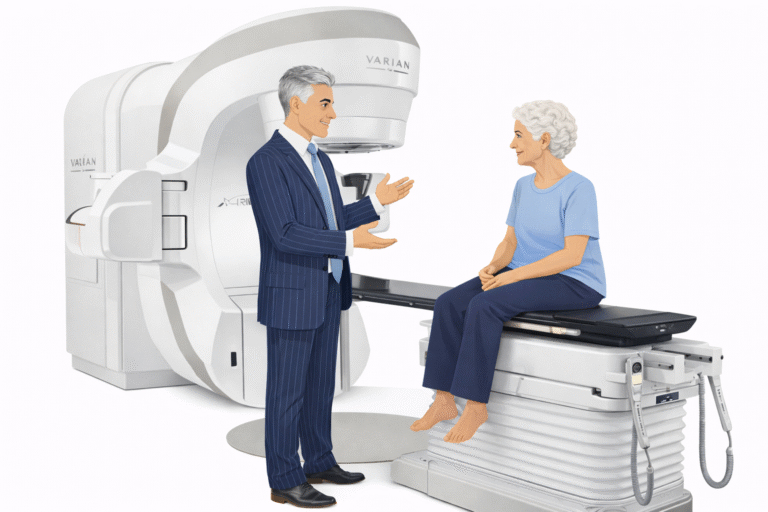
Treatment begins with an assessment by a radiation oncologist to confirm that the symptoms and imaging are consistent with osteoarthritis and that low-dose radiotherapy is a reasonable option. The location of the pain, degree of functional limitation, previous treatments, age and other possible causes of symptoms are all considered before proceeding.
At Pinpoint Radiotherapy, osteoarthritis is typically treated with 0.5 Gy over six treatment sessions, for a total dose of 3 Gy. Treatments are generally delivered on alternate days over approximately two to three weeks. This is a small fraction of the radiation dose commonly used during cancer treatment.
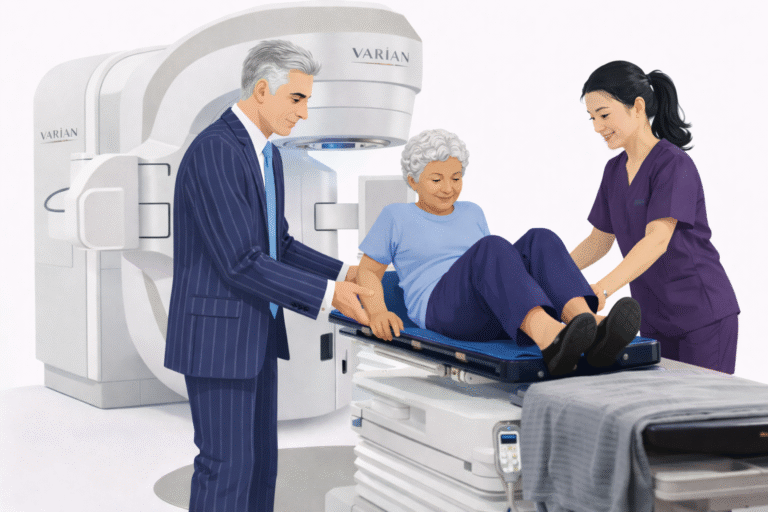
Planning allows the affected joint and surrounding inflammatory tissues to be treated accurately while limiting unnecessary exposure beyond the treatment area. Each session is short and non-invasive. There are no needles, anaesthetic or surgery involved, the radiation cannot be felt, and patients can usually continue their normal activities throughout the course.
One of the important features of LDRT is that improvement may be gradual. Some patients notice a change relatively early, while for others pain and mobility continue to improve over several weeks or months after treatment. This is consistent with an anti-inflammatory effect rather than an immediate pain-relieving effect.
Patients are therefore usually reviewed after sufficient time has passed to assess the response properly. If there has been a worthwhile but incomplete improvement, a second course can sometimes be considered after approximately three months. If there has been no meaningful response, the situation should be reassessed rather than simply repeating treatment.
Because the radiation dose is low, immediate treatment-related side effects are uncommon. The more important consideration is the small potential long-term risk associated with radiation exposure, particularly the theoretical risk of a secondary cancer many years later. This risk is influenced by age and the anatomical site being treated, which is why patient selection remains important. For older patients receiving treatment to peripheral joints, contemporary long-term safety data are reassuring.
Pinpoint Radiotherapy
At Pinpoint Radiotherapy, low-dose radiotherapy is offered as part of the broader management of osteoarthritis rather than as a replacement for established treatments.
It may be particularly relevant for people whose pain and stiffness continue to interfere with walking, exercise, sleep or everyday activities despite appropriate conservative treatment, and who are looking for another non-invasive option. The knees are commonly treated, but LDRT can also be considered for osteoarthritis affecting areas such as the hands, wrists, feet and ankles where clinically appropriate.
Each patient is assessed individually because the presence of osteoarthritis on an X-ray alone does not mean that radiotherapy will be helpful. The pattern of symptoms, degree of inflammation, previous treatment, age, imaging findings and other possible causes of pain all need to be considered together.
For appropriately selected patients, the goal of low-dose radiotherapy is straightforward: to reduce inflammation and pain sufficiently to make movement and everyday activity easier. It does not reverse the structural changes of osteoarthritis, and there is no guarantee of response, but it provides another evidence-based treatment option for patients living with persistent joint pain.
Evidence and further reading
- Dove A, Koneru B, Small W Jr, et al. American Radium Society Appropriate Use Criteria for Low-Dose Radiotherapy for Treatment of Osteoarthritis. Am J Clin Oncol. 2026. PubMed
- Ott OJ, Niewald M, Weitmann HD, et al. DEGRO guidelines for the radiotherapy of non-malignant disorders. Part II: Painful degenerative skeletal disorders. Strahlenther Onkol. 2015. PubMed
- Mahler EAM, Minten MJM, Leseman-Hoogenboom MM, et al. Effectiveness of low-dose radiation therapy on symptoms in patients with knee osteoarthritis: a randomised, double-blinded, sham-controlled trial. Ann Rheum Dis. 2019. PubMed
- Hammadeh BM, et al. Efficacy, safety, and pain management of low-dose radiation therapy in osteoarthritis: a systematic review and meta-analysis. Rheumatol Int. 2025. PubMed
- Blach RM, Sonnhoff M, Muecke R, et al. Risk of radiation-induced malignancy after low-dose radiotherapy for non-malignant musculoskeletal disorders. Int J Radiat Oncol Biol Phys. 2026. PubMed