When Heel Pain Does Not Settle
Plantar fasciitis is one of the most common causes of persistent pain beneath the heel.
For many people, symptoms improve with time, stretching, activity modification, appropriate footwear, orthotics and physiotherapy.
For others, heel pain persists for many months despite these measures.
Low-dose radiotherapy, or LDRT, is an additional treatment that may be considered in selected patients with chronic plantar fasciitis that has not responded adequately to conservative treatment.
Unlike its use in osteoarthritis, the evidence for LDRT in plantar fasciitis has developed through its own series of clinical studies and randomised trials.
It is also one of the musculoskeletal conditions for which international radiotherapy guidelines now specifically recognise a potential role for LDRT.
What Is Plantar Fasciitis?
The plantar fascia is a strong band of connective tissue running along the bottom of the foot from the heel towards the toes.
It helps support the arch of the foot and absorbs forces during standing, walking and running.
Plantar fasciitis typically causes pain where the plantar fascia attaches to the heel bone, or calcaneus.
Patients often describe:
sharp pain beneath or towards the inside of the heel
pain with the first steps after getting out of bed
pain after sitting for a prolonged period
discomfort after standing or walking for long periods
pain that temporarily eases with movement but returns after activity.
Although the term “plantar fasciitis” suggests inflammation, chronic plantar heel pain is more complex.
In longstanding cases, degenerative changes within the plantar fascia can occur alongside altered tissue repair and local inflammatory signalling. For this reason, some clinicians use the term plantar fasciopathy, particularly when symptoms have become chronic.
What About a Heel Spur?
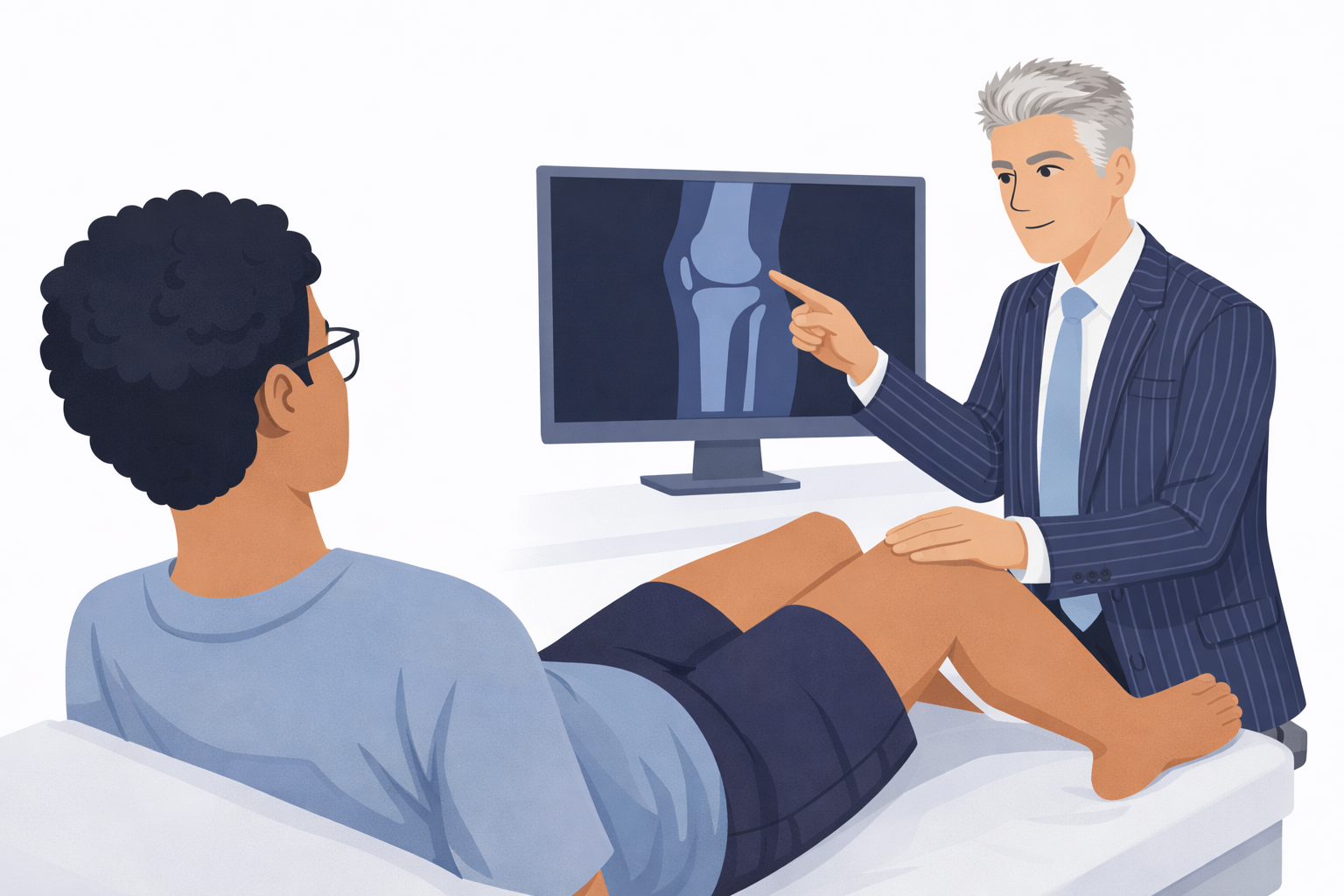
Heel spurs are frequently seen on X-rays in patients with plantar fasciitis.
However, the spur itself is not necessarily the cause of the pain.
Many people have heel spurs without symptoms, while others have typical plantar fasciitis without a prominent spur.
The important structure is usually the plantar fascia and its attachment to the calcaneus rather than the presence or absence of a spur alone.
This is why treatment decisions should be based on the pattern of symptoms, examination and appropriate imaging rather than simply whether an X-ray shows a heel spur.
Why Does Plantar Fasciitis Sometimes Become Chronic?
Plantar fasciitis often develops after repeated loading of the plantar fascia.
Contributing factors can include:
prolonged standing or walking
changes in activity levels
running or other repetitive loading
tight calf muscles
reduced ankle flexibility
foot biomechanics
footwear
increased body weight
occupations requiring long periods on the feet.
For most patients, symptoms eventually settle.
However, in some people the normal healing process appears to stall.
Repeated microtrauma, local tissue degeneration and persistent inflammatory signalling may then contribute to continuing pain.
It is this chronic refractory phase, rather than newly developed heel pain, where LDRT is generally considered.
Where Does LDRT Fit Into Treatment?
LDRT is not generally a first treatment for plantar fasciitis.
Initial management commonly includes:
modification of aggravating activities
plantar fascia and calf stretching
appropriate footwear
orthotics where indicated
physiotherapy
analgesic or anti-inflammatory medication where appropriate
night splints in selected patients
other interventions such as shockwave therapy or injections where clinically appropriate.
Many people improve with these approaches.
LDRT becomes more relevant when symptoms have persisted despite an appropriate period of conservative management.
The 2026 American Radium Society Appropriate Use Criteria specifically considered LDRT an appropriate second-line treatment for chronic plantar fasciitis refractory to other therapies.
The Royal College of Radiologists in the United Kingdom has similarly recommended that radiotherapy may be considered for plantar fasciitis that has persisted for more than six months despite conservative management.
How Might LDRT Help Plantar Fasciitis?
The radiation doses used for plantar fasciitis are very different from those used to treat cancer.
The aim is not to damage or destroy the plantar fascia.
At low doses, radiation appears to influence inflammatory and immune signalling within treated tissues.
Laboratory studies suggest effects on:
inflammatory cells
macrophage activity
endothelial cells
inflammatory cytokines
interactions between immune cells and local tissues.
The precise mechanism responsible for pain improvement in plantar fasciitis remains under investigation.
The intention is to modify the chronic inflammatory environment around the plantar fascia insertion and allow symptoms to settle over time.
LDRT does not remove a heel spur and it does not mechanically reconstruct the plantar fascia.
What Does the Evidence Show?
Plantar fasciitis is one of the benign musculoskeletal conditions with randomised clinical evidence supporting LDRT.
That evidence needs to be interpreted carefully.
Several trials have compared different radiation doses, and one important trial compared radiotherapy with corticosteroid injection.
However, unlike some of the newer research in osteoarthritis, there has not yet been a modern true sham-controlled trial of LDRT for plantar fasciitis.
This means placebo effects and the natural tendency of plantar fasciitis to improve over time cannot be completely separated from treatment effect.
Even with that limitation, the randomised evidence is interesting.
The Niewald Randomised Trial
One of the landmark studies was a German multicentre randomised trial led by Marcus Niewald.
Patients with painful plantar fasciitis were allocated to one of two radiation schedules.
The therapeutic treatment group received:
1 Gy per treatment for six treatments
for a total dose of:
6 Gy
The comparison group received an extremely low dose:
0.1 Gy per treatment for six treatments
for a total dose of:
0.6 Gy
A total of 66 patients entered the trial.
At three months, outcomes were significantly better in the 6 Gy group across measures of pain, heel symptoms and quality of life.
The difference was sufficiently pronounced that recruitment was stopped early.
Patients were then followed for 12 months.
Those who had responded well at three months generally maintained their benefit, and some continued to improve between three and twelve months.
Patients who had initially received the very-low-dose treatment and had insufficient improvement could subsequently receive the standard dose, after which their outcomes approached those of patients originally allocated to the therapeutic treatment.
The study therefore provided evidence that the treatment dose mattered.
However, because the comparator group still received a very small amount of radiation rather than true sham treatment, it could not completely determine how much of the overall improvement was due specifically to radiation.
Radiotherapy Compared With Corticosteroid Injection
Another important randomised trial was published in 2015.
Researchers enrolled 128 patients with plantar fasciitis and randomly assigned them to either:
low-dose radiotherapy
local corticosteroid injection.
The radiotherapy group received:
1 Gy × 6 treatments
for a total dose of:
6 Gy.
Patients were assessed using measures of pain and function over follow-up.
The radiotherapy group experienced greater improvement in pain and function than the corticosteroid group at both three and six months.
Approximately 68% of patients receiving radiotherapy achieved a complete or partial response at six months, compared with approximately 28% receiving corticosteroid injection.
The improvement following radiotherapy also appeared durable during longer follow-up.
This provides useful comparative evidence, although it should not be interpreted in the same way as a placebo-controlled trial.
Both groups received active treatment, and differences in baseline characteristics and the nature of the interventions need to be considered.
Why Is the Evidence Different From Osteoarthritis?
This is an important distinction.
The research history of LDRT differs between conditions.
For knee osteoarthritis, much of the current scientific debate centres around modern sham-controlled randomised trials.
For plantar fasciitis, several randomised studies were performed much earlier, but they generally compared:
one radiation dose with another
or radiotherapy with another active treatment.
These trials show that patients receiving therapeutic LDRT doses can experience substantial and durable improvement.
They also provide evidence that the radiation dose appears to matter.
But without a true sham-controlled arm, they cannot completely quantify how much of the observed improvement is attributable specifically to radiation.
That limitation should be acknowledged rather than ignored.
What Do Current Guidelines Say?
The evidence has been sufficient for plantar fasciitis to be recognised in several international radiotherapy guidelines.
The Royal College of Radiologists recommends that radiotherapy may be considered for plantar fasciitis persisting for more than six months after conservative management has failed.
Its recommended treatment range is:
3 to 6 Gy delivered in six treatments of 0.5 to 1 Gy.
German DEGRO guidance has similarly recognised plantar fasciitis among the painful enthesopathies that may be considered for low-dose radiotherapy after simpler measures have not produced persistent relief.
More recently, the 2026 American Radium Society Appropriate Use Criteria reviewed the contemporary evidence for inflammatory periarticular conditions.
The multidisciplinary panel concluded that LDRT is an appropriate second-line treatment for chronic plantar fasciitis that remains symptomatic despite other therapies.
Importantly, the panel did not recommend LDRT as routine first-line treatment.
Who Might Be Suitable for LDRT?
A typical patient being considered for LDRT may have:
characteristic plantar heel pain
symptoms present for several months or longer
pain affecting walking or daily activities
persistent symptoms despite stretching and physiotherapy
appropriate footwear or orthotics already trialled
other conservative treatments that have not provided adequate lasting relief.
Age is also important.
Because radiotherapy is being used for a benign condition, the small potential long-term radiation risk needs to be weighed against the expected benefit.
LDRT is therefore generally more attractive in older adults with persistent symptoms than in younger patients with recently developed plantar fasciitis.
Making Sure It Really Is Plantar Fasciitis
Not all heel pain is plantar fasciitis.
Other causes can include:
Achilles insertional tendinopathy
calcaneal stress fracture
nerve entrapment
inflammatory arthritis
heel fat-pad disorders
referred pain
other foot and ankle pathology.
Some patients may also have more than one cause of pain.
Before considering LDRT, the history, examination and available imaging should therefore be reviewed to confirm that the pain pattern is consistent with plantar fasciitis.
Treatment should not simply be based on finding a heel spur on an X-ray.
What Does Treatment Involve?
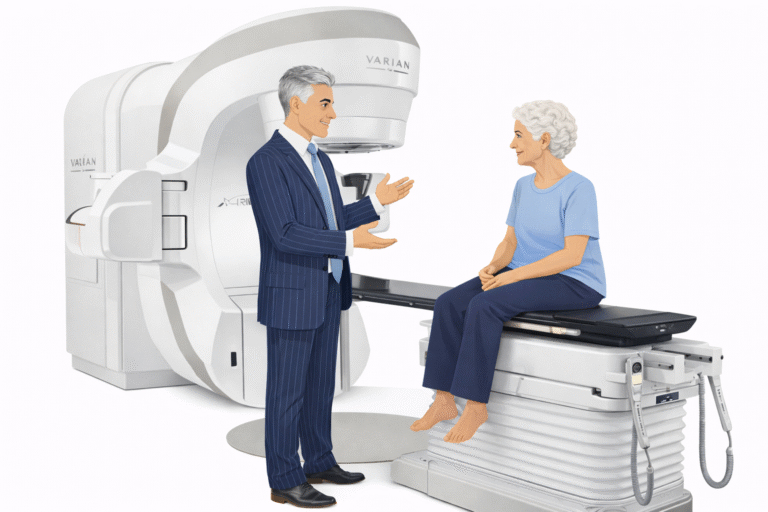
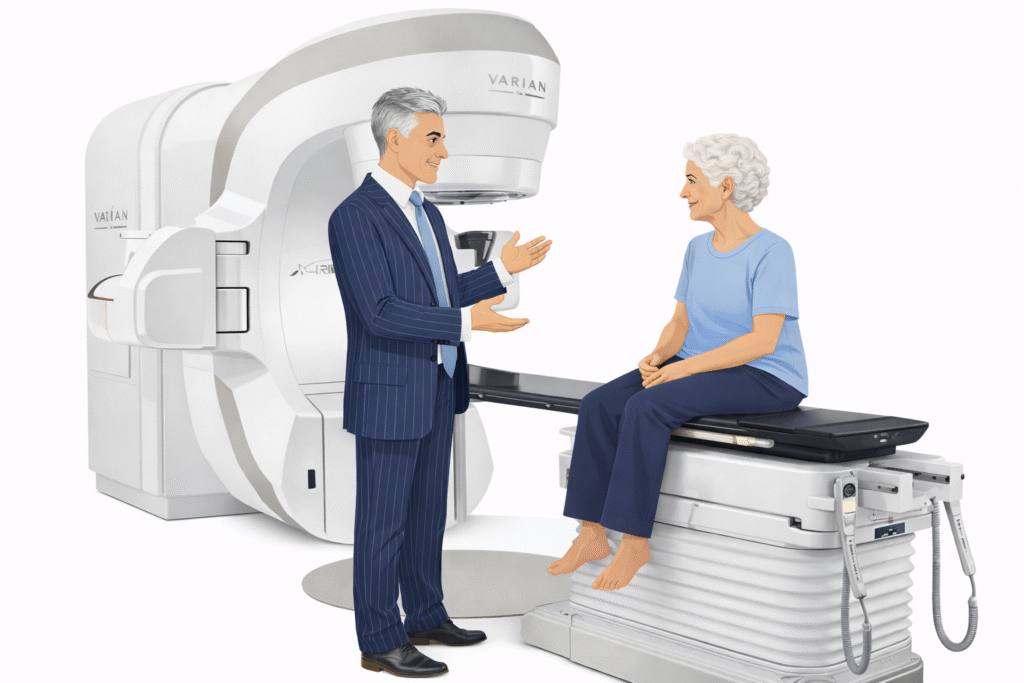
The first step is consultation with a radiation oncologist.
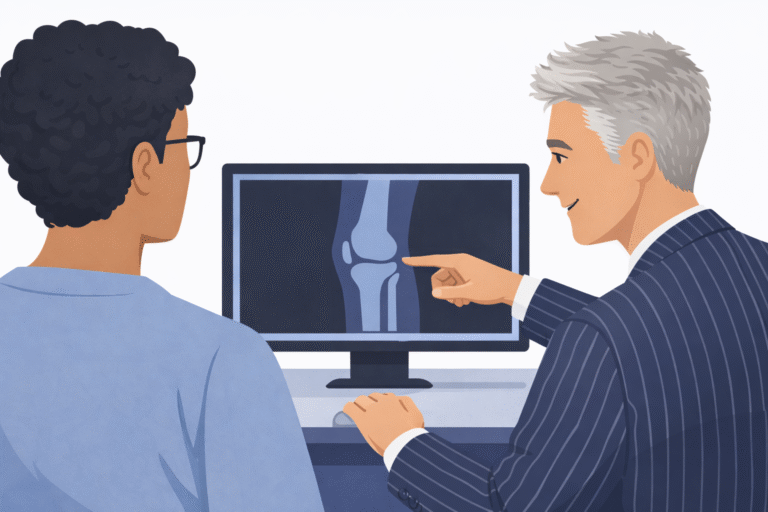
The history of the heel pain, previous treatments and relevant imaging are reviewed.
If LDRT is considered appropriate, a radiotherapy planning appointment is arranged.
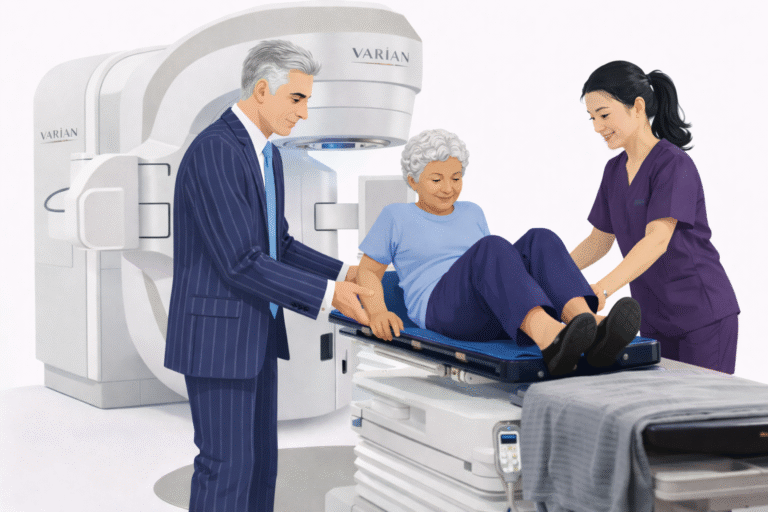
The heel and plantar fascia are positioned comfortably and the treatment area is carefully defined.
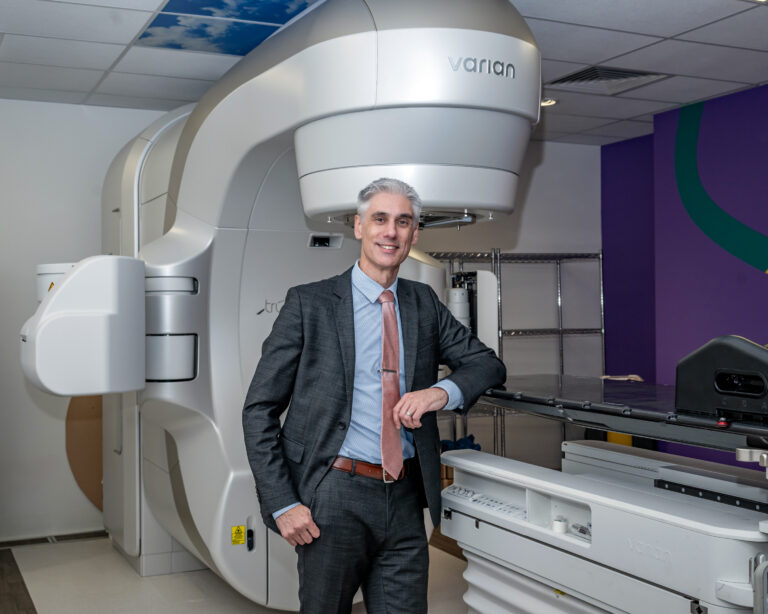
Treatment is then delivered using a linear accelerator.
The radiation cannot be seen or felt.
No anaesthetic is required.
There is no injection involved in delivering the radiation.
Patients are not radioactive afterwards and can generally continue their usual daily activities.
How Much Radiation Is Used?
Published plantar fasciitis trials have commonly used total doses between 3 and 6 Gy, delivered using six low-dose treatments.
At Pinpoint Radiotherapy, our typical treatment course for plantar fasciitis is:
1 Gy per treatment for six treatments
giving a total dose of:
6 Gy.
This is consistent with the therapeutic regimen used in key randomised studies of plantar fasciitis.
It is worth distinguishing this from our typical treatment schedule for osteoarthritis, where we generally use 0.5 Gy × 6 treatments, giving a total dose of 3 Gy.
Different benign musculoskeletal conditions have different clinical histories and evidence bases, and the radiation prescription is selected accordingly.
Why Do We Use 1 Gy × 6 for Plantar Fasciitis?
The 1 Gy × 6 schedule has been studied directly in randomised plantar fasciitis trials.
In the German dose-comparison trial, the therapeutic 6 Gy regimen produced significantly better outcomes than the very-low-dose 0.6 Gy regimen.
The same 1 Gy × 6 schedule was also used in the randomised comparison with corticosteroid injection.
For this reason, our typical plantar fasciitis treatment reflects the dose schedule for which there is direct condition-specific clinical evidence.
Treatment remains individualised, but 1 Gy × 6 is our usual regimen for plantar fasciitis.
How Quickly Does It Work?
LDRT is not intended to act like a local anaesthetic injection.
Improvement may be gradual.
Some patients begin to notice a reduction in symptoms within several weeks.
For others, improvement continues to develop over several months.
This delayed response has been observed in the plantar fasciitis literature, with some patients continuing to improve between three and twelve months after treatment.
Possible signs of improvement include:
less pain with the first steps in the morning
being able to stand for longer
increased walking distance
less pain after activity
reduced dependence on pain medication
improved confidence loading the foot.
The outcome should therefore not necessarily be judged immediately after the final treatment.
What If There Is Only a Partial Response?
A partial response can still be meaningful.
Someone may still be aware of their heel but be able to walk substantially further or return to activities that had previously been difficult.
Historically, several LDRT protocols have allowed a second treatment course when there has been some improvement but persistent symptoms.
Whether further treatment is appropriate depends on the initial response, the dose already delivered, age and individual circumstances.
A second course is not automatically required.
Is LDRT Safe for the Heel?
The heel is a peripheral treatment site.
This is relevant because the amount of radiosensitive internal tissue exposed during treatment is relatively limited compared with treatment of more central parts of the body.
Immediate radiation side effects are generally minimal at the doses used.
The principal concern is the small theoretical long-term risk associated with ionising radiation.
Recent long-term data involving almost 4,700 patients treated with LDRT for benign musculoskeletal conditions are reassuring for peripheral treatment sites, although radiation risk cannot be considered zero.
Age and anatomical location therefore remain important when deciding whether treatment is justified.
We discuss this in detail in our separate article on the safety of LDRT.
Can I Continue Physiotherapy and Stretching?
Usually, yes.
LDRT should not be viewed as replacing appropriate foot and ankle rehabilitation.
Calf flexibility, plantar fascia stretching, appropriate footwear, load management and strengthening may continue to be useful.
If pain improves, activity should generally be increased gradually rather than immediately returning to high levels of loading.
Reducing symptoms may provide an opportunity to participate more comfortably in rehabilitation and everyday activity.
Why Has LDRT for Plantar Fasciitis Received Less Attention in Australia?
The use of radiotherapy for benign inflammatory and musculoskeletal conditions developed very differently around the world.
In Germany and parts of central Europe, LDRT remained part of routine clinical practice.
In Australia, the United Kingdom and North America, radiation oncology increasingly focused on cancer treatment and benign musculoskeletal radiotherapy became much less familiar.
That is now beginning to change.
The publication of modern multidisciplinary guidance, renewed interest in functional radiation medicine and increasing international collaboration are bringing greater attention to treatments that have remained part of European radiation oncology for decades.
Plantar fasciitis is particularly interesting because it already has randomised clinical evidence and is now specifically recognised in contemporary North American guidance.
LDRT for Plantar Fasciitis at Pinpoint Radiotherapy
At Pinpoint Radiotherapy, LDRT is considered for selected patients with persistent plantar fasciitis despite appropriate conservative management.
Assessment includes:
confirming that the symptoms are consistent with plantar fasciitis
reviewing previous treatment
reviewing imaging where appropriate
considering the duration and severity of symptoms
assessing age and radiation risk
discussing what LDRT can and cannot achieve.
Where treatment is appropriate, our usual plantar fasciitis course is:
1 Gy × 6 treatments
for a total dose of:
6 Gy.
This is consistent with the therapeutic regimen investigated in key randomised studies of plantar fasciitis.
The aim is not to remove a heel spur or structurally rebuild the plantar fascia.
The aim is to influence the chronic inflammatory environment around the painful plantar fascia insertion and reduce symptoms.
The available evidence includes randomised dose-comparison trials, a randomised comparison with corticosteroid injection, long European clinical experience and contemporary international guidance.
At the same time, there has not yet been a modern true sham-controlled trial for plantar fasciitis, so the limitations of the evidence should be understood.
For an appropriately selected patient whose heel pain has persisted despite standard conservative treatment, LDRT provides an additional non-invasive treatment option that can be considered as part of a broader management plan.
Evidence and further reading
Niewald M, Seegenschmiedt MH, Micke O, et al. Randomized, multicenter trial on radiotherapy for plantar fasciitis comparing a standard dose with a very low dose. Int J Radiat Oncol Biol Phys. 2012. PubMed
Canyilmaz E, Canyilmaz F, Aynaci O, et al. Prospective Randomized Comparison of the Effectiveness of Radiation Therapy and Local Steroid Injection for the Treatment of Plantar Fasciitis. Int J Radiat Oncol Biol Phys. 2015. PubMed
Ott OJ, Niewald M, Weitmann HD, et al. DEGRO guidelines for the radiotherapy of non-malignant disorders. Part II: Painful degenerative skeletal disorders. Strahlenther Onkol. 2015. PubMed
American Radium Society Appropriate Use Criteria for Low-Dose Radiotherapy for Inflammatory Periarticular Disorders. 2026. PubMed