A More Focused Approach to Brain Metastases
Brain metastases occur when cancer cells spread from another part of the body to the brain. They can arise from many cancers, particularly lung, breast, melanoma and kidney cancers, and may be detected because of symptoms or increasingly through surveillance imaging.
Treatment depends on the size, number and location of the metastases, whether symptoms are present, the behaviour of the cancer elsewhere in the body and the patient’s overall health. Surgery remains important for selected larger or symptomatic lesions, while stereotactic radiosurgery, or SRS, has become a central treatment for smaller, well-defined brain metastases.
Despite the name, SRS does not involve surgery. It delivers a highly focused, ablative dose of radiation to individual tumours while limiting radiation exposure to the surrounding normal brain. Treatment may be given in a single session or divided over several treatments when lesions are larger or close to sensitive structures.
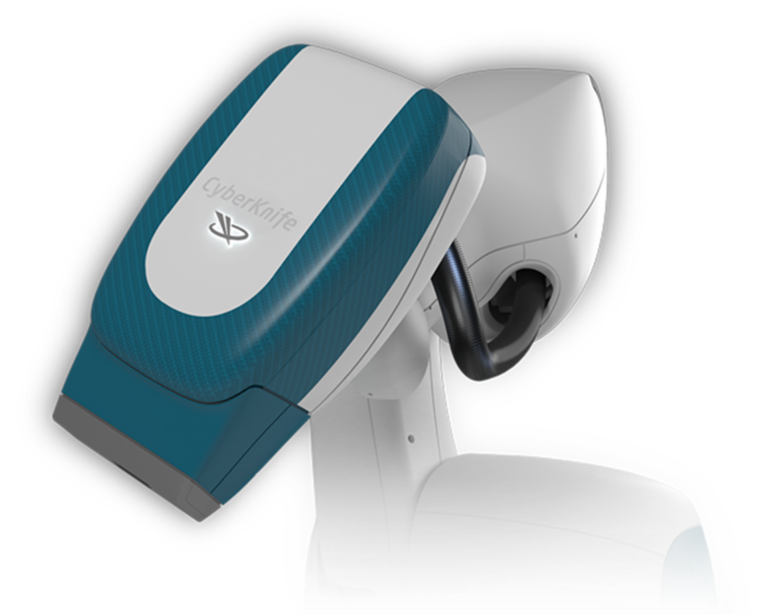
Accurate treatment begins with high-resolution contrast-enhanced MRI, which allows very small metastases to be identified and precisely defined in relation to important structures such as the brainstem and optic pathways. These images are combined with radiotherapy planning imaging so that each tumour can be targeted with millimetre-level accuracy. SRS can then be delivered using specialised platforms including Gamma Knife, CyberKnife and modern linear accelerators. Although the technologies differ, the principle is the same: concentrate a high radiation dose within the metastasis with a rapid fall-off outside it, thereby limiting unnecessary radiation exposure to healthy brain.
Why SRS Has Changed Brain Metastasis Treatment
Historically, patients with multiple brain metastases were commonly treated with whole-brain radiotherapy. While this can reduce the risk of new metastases developing elsewhere in the brain, exposing the entire brain to radiation increases the risk of cognitive decline.
Randomised trials have shown that for selected patients with a limited number of brain metastases, SRS alone better preserves cognitive function than combining SRS with whole-brain radiotherapy, without improving overall survival by routinely adding whole-brain treatment. The trade-off is that new metastases elsewhere in the brain are more likely to develop, which makes regular MRI surveillance particularly important.
SRS is also increasingly used after surgical removal of a brain metastasis. Treating the surgical cavity with focused radiation can reduce the risk of recurrence at that site while avoiding routine treatment of the entire brain.
The number of metastases is no longer the only consideration. Prospective evidence has shown that carefully selected patients with five to ten brain metastases can achieve outcomes comparable with those treating two to four lesions, provided the overall volume of disease is limited. Tumour size and total volume, location, performance status and control of cancer elsewhere in the body can therefore be just as important as simply counting lesions.
When Is SRS Most Useful?
SRS is particularly suited to patients with a limited volume of brain metastatic disease where the individual lesions can be safely targeted.
A very small metastasis in a favourable location may be treated in a single session, while a larger lesion or one sitting close to a sensitive structure may be treated over several sessions to reduce the risk to surrounding normal brain.
The broader cancer picture also matters. A patient whose disease elsewhere in the body is well controlled may benefit differently from aggressive treatment of brain metastases than someone with rapidly progressing cancer throughout several organs. Similarly, some larger symptomatic lesions may be better treated surgically first, followed by SRS to the surgical cavity.
The aim is therefore not simply to use SRS whenever a brain metastasis is identified. It is to choose the approach that provides the best balance between local tumour control, preservation of neurological function and the patient’s overall cancer management.
Our Approach to Brain Metastases
At Pinpoint Radiotherapy, each case is assessed according to the overall clinical situation rather than simply the number of brain metastases present.
The size and total volume of disease, location of individual lesions, symptoms, high-resolution MRI findings, previous treatments and the status of the cancer elsewhere in the body all contribute to the treatment recommendation.
For suitable patients, SRS can achieve high rates of control of treated brain metastases while limiting radiation exposure to surrounding normal brain. Depending on the situation, treatment may involve one lesion, several metastases or the surgical cavity following removal of a larger tumour.
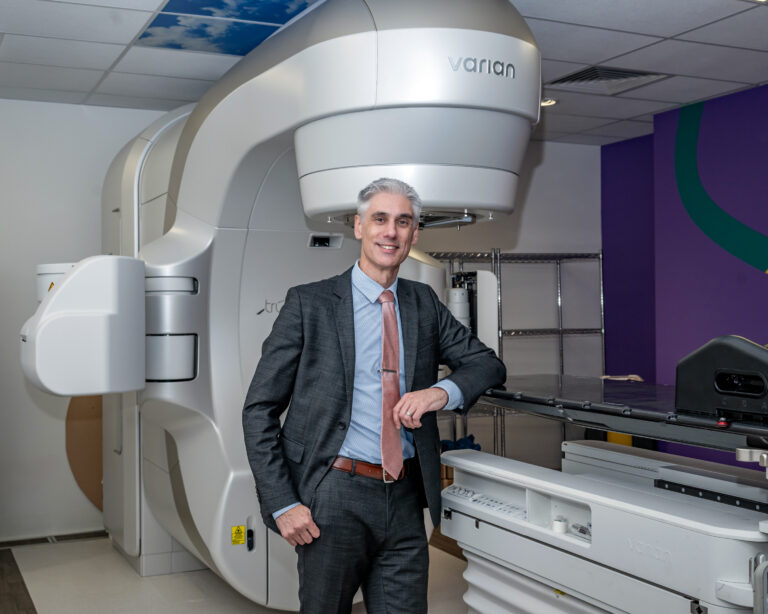
Gamma Knife, CyberKnife and modern linear accelerator-based SRS can all provide highly precise treatment when used appropriately. At Pinpoint Radiotherapy, the emphasis is on selecting the most suitable technique for the individual patient and using modern imaging and stereotactic planning to deliver treatment as accurately as possible.
The goal is straightforward: control the known brain metastases while preserving as much healthy brain tissue and neurological function as possible.
Evidence and further reading
Gondi V, Bauman G, Bradfield L, et al. Radiation Therapy for Brain Metastases: An ASTRO Clinical Practice Guideline. Pract Radiat Oncol. 2022. PubMed
Brown PD, Jaeckle K, Ballman KV, et al. Effect of Radiosurgery Alone vs Radiosurgery With Whole Brain Radiation Therapy on Cognitive Function in Patients With 1 to 3 Brain Metastases. JAMA. 2016. PubMed
Brown PD, Ballman KV, Cerhan JH, et al. Postoperative stereotactic radiosurgery compared with whole brain radiotherapy for resected metastatic brain disease. Lancet Oncol. 2017. PubMed
Yamamoto M, Serizawa T, Shuto T, et al. Stereotactic radiosurgery for patients with multiple brain metastases (JLGK0901). Lancet Oncol. 2014. PubMed