SABR for Tumours in the Liver
Stereotactic ablative body radiotherapy, or SABR, allows a high radiation dose to be delivered precisely to selected tumours in the liver over only a few treatment sessions. It can be used for both primary liver cancers, particularly hepatocellular carcinoma or HCC, and metastatic tumours that have spread to the liver from another cancer.
The liver can be challenging to treat because maintaining healthy liver function is important, particularly in patients with underlying cirrhosis or previous liver treatments. SABR uses highly conformal treatment planning to concentrate radiation within the tumour while limiting exposure to the remaining liver and nearby structures such as the stomach, bowel and chest wall.
Its role depends on the clinical situation. In HCC, SABR may be considered when surgery, transplantation or other liver-directed treatments are not appropriate or have already been used. For liver metastases, it is most commonly considered when there are a limited number of sites and durable local control of those lesions is likely to contribute meaningfully to the patient’s broader cancer treatment.
What Does the Evidence Show?
For hepatocellular carcinoma, a large systematic review and meta-analysis included 17 studies and 1,889 patients treated with stereotactic radiotherapy. Local tumour control was approximately 84% at three years and 82% at five years, demonstrating that treatment can provide durable control in appropriately selected patients. The randomised RTOG 1112 trial has also strengthened the evidence in more advanced HCC, showing improved outcomes when SABR was incorporated before systemic treatment in selected patients.
The evidence for liver metastases is similarly substantial. A recent International Stereotactic Radiosurgery Society systematic review and meta-analysis included 33 studies, more than 3,100 patients and over 4,400 liver metastases. Pooled local control was approximately 85% at one year, 75% at two years and 68% at three years, with serious grade 3 or 4 treatment-related side effects occurring in around 3% of patients.
These results need to be interpreted in context. Outcomes vary according to the type of cancer, tumour size, radiation dose, number of metastases and the behaviour of disease elsewhere in the body. SABR is therefore most useful when local treatment of the liver lesion fits into a broader cancer management strategy rather than simply because a tumour can technically be targeted.
Precision Matters When the Liver Moves
One of the challenges of liver SABR is that tumours can move significantly as a patient breathes. Treatment planning therefore needs to understand both where the tumour is and how it moves during respiration.
Four-dimensional CT imaging, breath-hold techniques, respiratory gating and tumour tracking can all be used depending on the individual situation. MRI and PET imaging may also be incorporated when they help define the tumour more accurately.
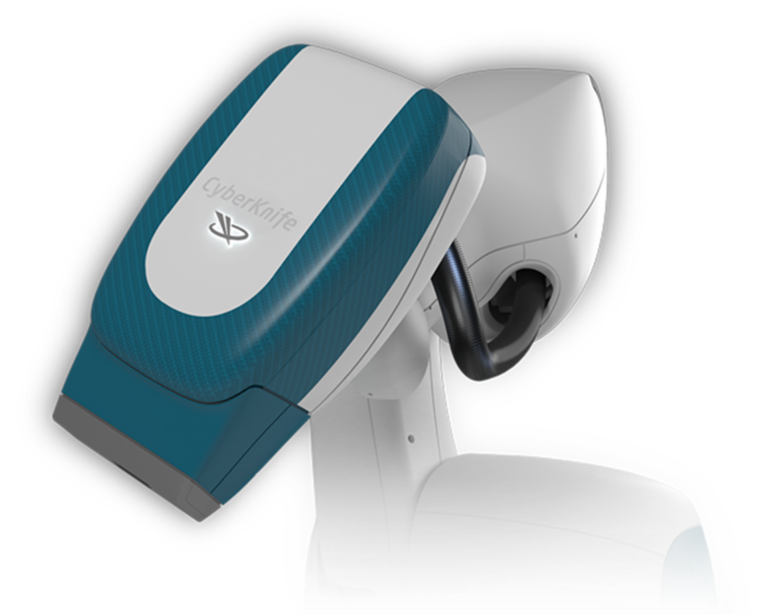
CyberKnife can be particularly useful for selected moving liver targets. Small fiducial markers can be placed near the tumour, allowing the Synchrony system to correlate the internal tumour position with the patient’s breathing and adjust beam delivery as the target moves. Modern conventional linear accelerators can also deliver excellent liver SABR using established motion-management techniques.
The aim with either approach is the same: accurately treat the tumour throughout the breathing cycle while keeping the volume of normal liver and nearby organs receiving high-dose radiation as small as possible.
Our Approach to Liver SABR
At Pinpoint Radiotherapy, liver SABR is considered according to the type of cancer, number and size of liver lesions, liver function, previous treatments, location of the tumour and the extent of cancer elsewhere in the body.
For primary liver cancer, treatment needs to be considered alongside other liver-directed options and the underlying health of the liver. For metastatic disease, the question is whether controlling the liver lesion is likely to contribute meaningfully to overall disease control, particularly in patients with oligometastatic or oligoprogressive cancer.
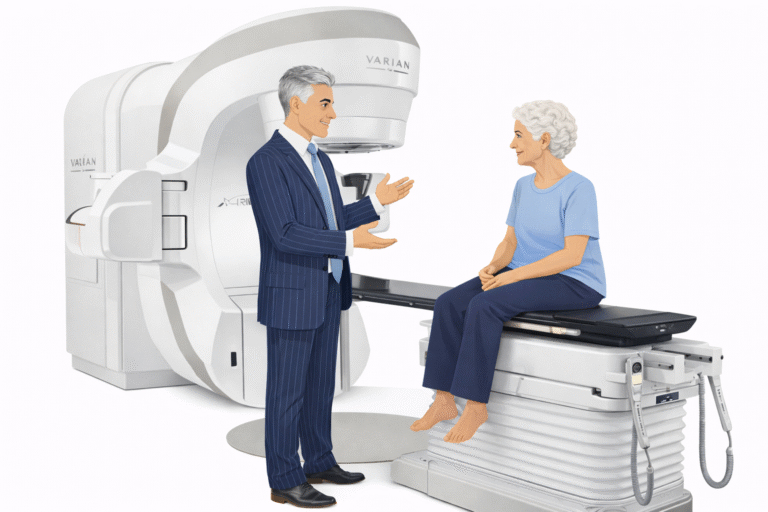
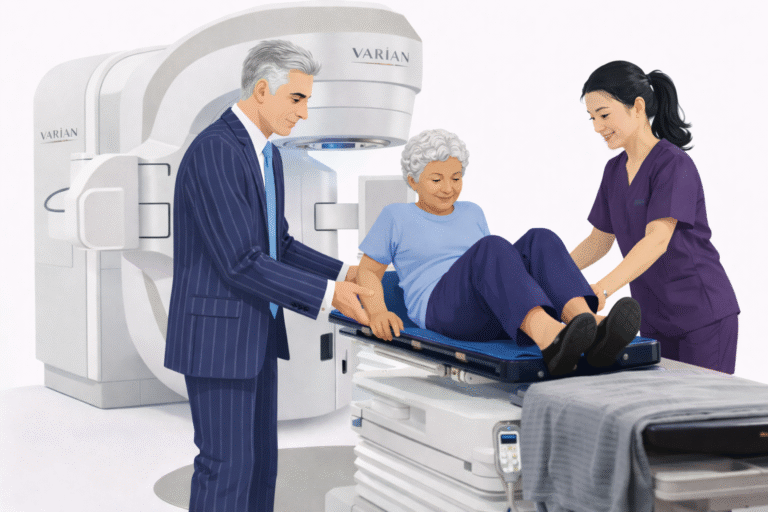
Treatment is generally completed over only a few sessions, with the technique and motion-management approach tailored to the individual tumour.
For appropriately selected patients, liver SABR provides a highly focused, non-invasive treatment capable of achieving durable control of both primary liver cancers and liver metastases while preserving as much healthy liver as possible.
Evidence and further reading
Dawson LA, Winter KA, Knox JJ, et al. Stereotactic Body Radiotherapy vs Sorafenib Alone in Hepatocellular Carcinoma: The NRG Oncology/RTOG 1112 Phase 3 Randomized Clinical Trial. JAMA Oncol. 2025. PubMed
Apisarnthanarax S, Barry A, Cao M, et al. External Beam Radiation Therapy for Primary Liver Cancers: An ASTRO Clinical Practice Guideline. Pract Radiat Oncol. 2022. PubMed
Bae SH, Chun SJ, Chung JH, et al. Stereotactic Body Radiotherapy for Hepatocellular Carcinoma: Meta-Analysis and International Stereotactic Radiosurgery Society Practice Guidelines. Int J Radiat Oncol Biol Phys. 2024. PubMed
Franzese C, Louie AV, Kotecha R, et al. Stereotactic Body Radiation Therapy for Liver Metastases: Systematic Review and Meta-Analysis With ISRS Practice Guidelines. Pract Radiat Oncol. 2025. PubMed