A Growing Role for SABR in Kidney Cancer
Surgery remains the standard treatment for many patients with localised kidney cancer, but not everyone is suitable for an operation. Some patients have medical conditions that increase surgical risk, impaired kidney function, technically challenging tumours, or choose not to undergo surgery after considering their options.
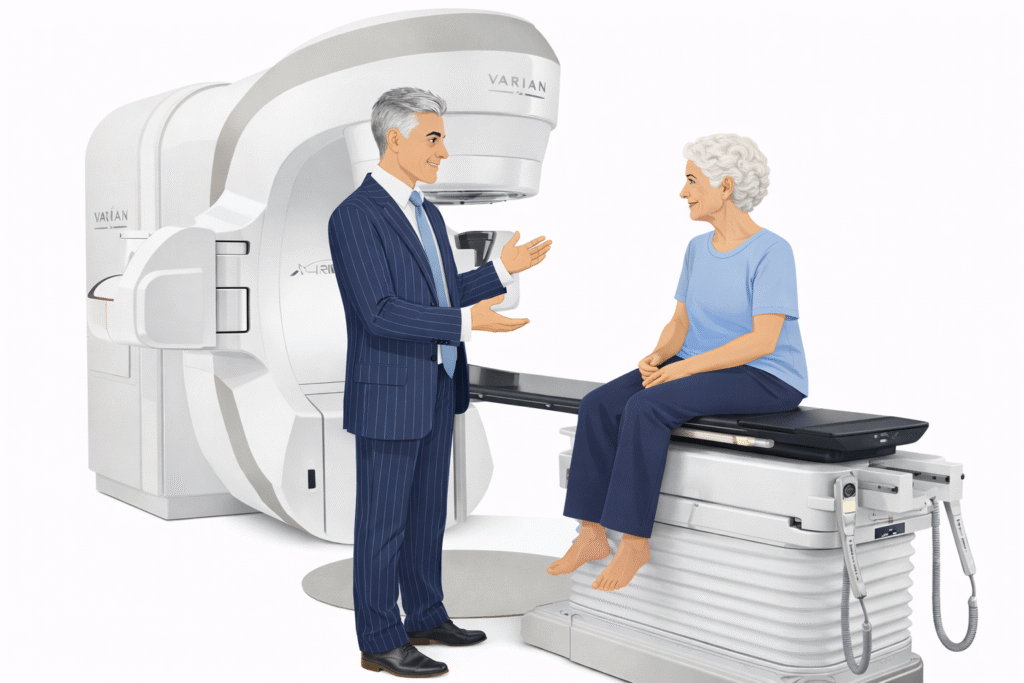
Stereotactic ablative body radiotherapy, or SABR, has emerged as an important non-invasive treatment option in this setting. It delivers a very high radiation dose precisely to the kidney tumour while limiting exposure to the surrounding functioning kidney, bowel and other nearby organs. Treatment is generally completed in only a few sessions.
Kidney cancer was historically considered relatively resistant to conventional radiotherapy. SABR has changed this understanding because renal cell cancers appear highly responsive when sufficiently high radiation doses are delivered accurately over a small number of treatments.
How Effective Is Kidney SABR?
The evidence has become increasingly consistent across multiple studies. A 2024 systematic review and meta-analysis of 13 prospective studies involving 308 patients reported local control of approximately 98% at one year and 97% at two years, with serious grade 3 or higher treatment-related side effects occurring in around 3%. A separate International Society of Stereotactic Radiosurgery review included 36 studies and 822 patients, finding a median local control rate of approximately 94%. Together, these reviews demonstrate consistently high tumour control across different centres, treatment techniques and patient groups.
The Australian-led FASTRACK II trial provides particularly valuable long-term prospective data. It treated 70 patients who were medically inoperable, at high surgical risk or had declined surgery, with a median tumour size of 4.6 cm. The initial study demonstrated 100% local control, and longer-term follow-up has continued to show no local recurrences through seven years, with no treatment-related deaths or grade 4 toxicity.
What Happens to Kidney Function?
Preserving kidney function is an important consideration because some normal kidney tissue inevitably receives radiation during treatment.
FASTRACK II showed that kidney function does decline after SABR, with the average estimated glomerular filtration rate, or eGFR, falling by approximately 11 mL/min during the first year and 15 mL/min by two years. Importantly, the decline then appeared to level off, with longer-term pooled FASTRACK data showing an average reduction of approximately 16 mL/min at five years.
This suggests that most of the change in kidney function occurs during the first couple of years after treatment rather than continuing to deteriorate indefinitely. Careful treatment planning therefore aims not only to control the tumour but also to preserve as much functioning kidney as possible.
Our Approach to Kidney SABR
At Pinpoint Radiotherapy, kidney SABR is considered for selected patients with localised kidney cancer where active treatment is required but surgery is not considered appropriate, carries increased risk or has been declined.
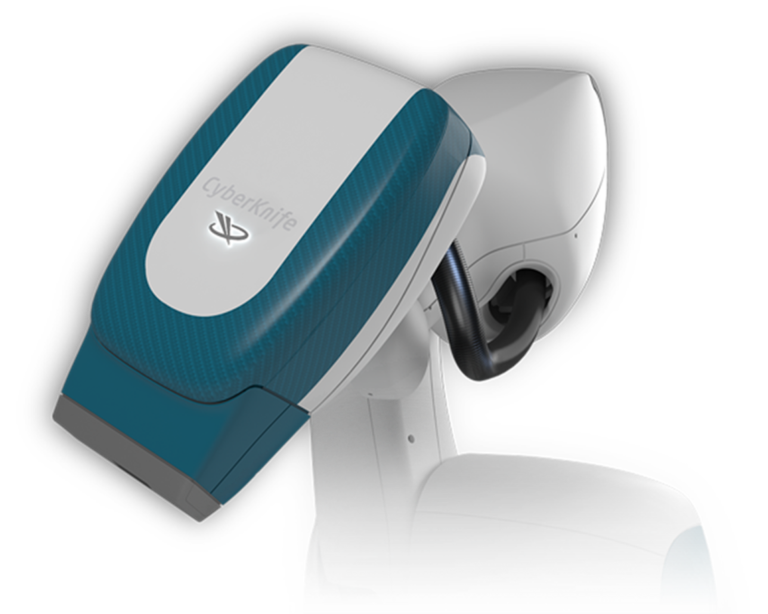
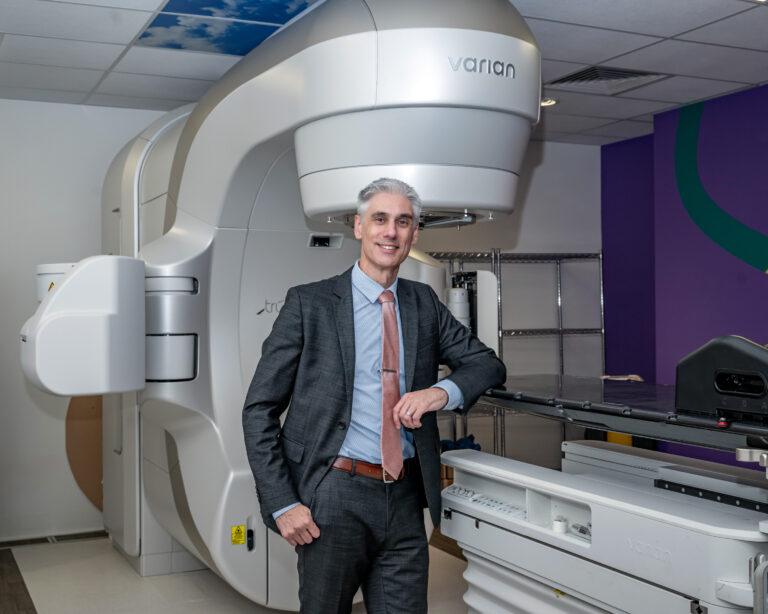
Assessment includes the tumour size and location, proximity to bowel and other sensitive structures, baseline kidney function and the amount of healthy kidney that can be protected. Treatment is usually delivered in only a few sessions, commonly around three treatments depending on the tumour and surrounding anatomy. Modern linear accelerator techniques or CyberKnife may be considered depending on the individual target and how best to manage movement with breathing.
For suitable patients, kidney SABR offers a short, non-invasive treatment supported by increasingly mature evidence showing very high rates of durable local tumour control with relatively low rates of serious toxicity.
The aim is to deliver an ablative radiation dose accurately to the kidney cancer while preserving as much normal kidney function as possible.
Evidence and further reading
Siva S, Pryor D, Martin J, et al. Stereotactic ablative body radiotherapy for primary kidney cancer (TROG 15.03 FASTRACK II): a non-randomised phase 2 trial. Lancet Oncol. 2024. PubMed
Siva S, Pryor D, Martin J, et al. Long-term outcomes of stereotactic ablative body radiotherapy for primary kidney cancer (TROG 15.03 FASTRACK II). Lancet Oncol. 2026. PubMed
Siva S, Louie AV, Kotecha R, et al. Stereotactic body radiotherapy for primary renal cell carcinoma: a systematic review and practice guideline from the International Society of Stereotactic Radiosurgery. Lancet Oncol. 2024. PubMed
Siva S, et al. Dose-Effect Relationship of Kidney Function After SABR for Primary Renal Cell Carcinoma: TROG 15.03 FASTRACK II. Int J Radiat Oncol Biol Phys. 2024. PubMed