When Tendon and Bursal Pain Becomes Chronic
Not all persistent musculoskeletal pain comes from arthritis.
Pain can also arise from tendons, the points where tendons attach to bone, and nearby bursae. Common examples include:
tennis elbow and golfer’s elbow
Achilles tendinopathy
patellar tendinopathy
greater trochanteric pain syndrome
shoulder tendinopathy and bursitis
other chronic enthesopathies and periarticular pain conditions.
Most of these conditions improve with time, activity modification, physiotherapy and progressive strengthening.
For some people, however, pain persists for many months despite appropriate treatment. It can interfere with walking, exercise, sleep, work and everyday activities.
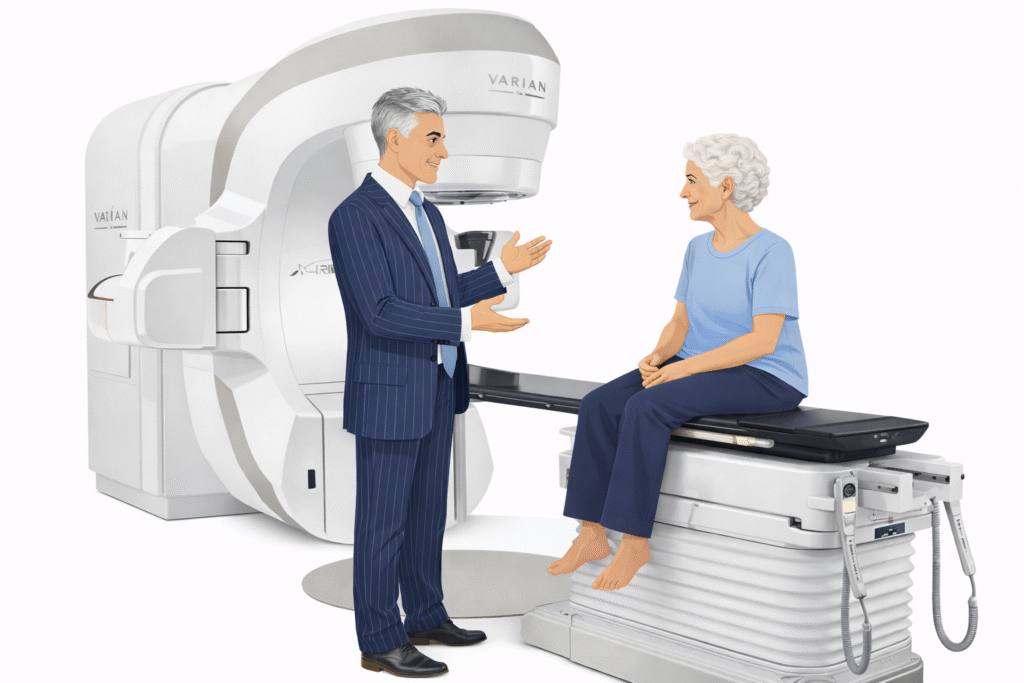
For selected patients with these chronic refractory conditions, low-dose radiotherapy, or LDRT, may provide another treatment option.
What Are Tendinopathy, Enthesopathy and Bursitis?
A tendon connects muscle to bone.
An enthesis is the area where a tendon or ligament attaches to bone. Persistent abnormalities around this attachment are sometimes described as enthesopathy.
A bursa is a small fluid-filled structure that allows tissues to move smoothly over one another.
These structures are closely related and problems often overlap.
For example, pain around the outside of the hip may involve the gluteal tendons, their attachment to the greater trochanter and surrounding bursae. Similarly, chronic shoulder pain can involve the rotator cuff tendons, their attachments and the subacromial bursa.
This is why persistent tendon and bursal pain is increasingly viewed as a spectrum of periarticular disorders, rather than a series of completely separate conditions.
Why Does Tendon Pain Become Persistent?
Chronic tendinopathy is more complicated than simple inflammation.
Repeated loading can produce changes in the tendon and its attachment to bone. There can be altered tissue repair, degeneration and changes in local inflammatory signalling.
Pain can then persist even after the initial trigger has disappeared.
This is why simply resting a tendon does not always solve the problem.
Modern treatment generally focuses on progressive loading, strengthening, correcting contributing mechanical factors and gradually restoring normal activity.
LDRT does not replace these measures.
Instead, it may have a role when persistent pain and inflammatory signalling continue despite appropriate conservative treatment.
How Might LDRT Help?
The radiation doses used for benign musculoskeletal conditions are very different from those used to treat cancer.
The aim is not to destroy tissue.
At low doses, radiation appears to influence inflammatory and immune processes within treated tissues.
Research suggests effects on inflammatory cells, macrophages, blood vessels and signalling molecules involved in chronic inflammation.
The precise mechanisms are still being investigated.
The clinical objective is simpler.
Reduce persistent pain and inflammatory activity sufficiently to improve function and allow patients to move and rehabilitate more comfortably.
LDRT cannot mechanically repair a significantly torn tendon or correct abnormal biomechanics.
Patient selection is therefore important.
Tennis Elbow and Golfer’s Elbow
Chronic elbow tendinopathy is one of the periarticular conditions with a relatively substantial history of LDRT research.
Both tennis elbow and golfer’s elbow can cause persistent pain with gripping, lifting and repetitive use of the arm.
Low-dose radiotherapy has been used for these conditions in Germany for many decades.
One of the larger prospective randomised studies included 199 patients with chronic painful elbow syndrome.
Across the study population, approximately 80% responded shortly after treatment and around 90% had responded by six weeks.
Long-term follow-up at a median of almost three years found an overall reported response rate of approximately 94%, suggesting that improvement could be durable.
Importantly, the trial compared different low-dose radiation schedules rather than LDRT with a true sham treatment.
The results therefore provide meaningful evidence of clinical response and durability, but cannot completely separate the effect of radiation from placebo effects or natural changes in symptoms.
This distinction is important when interpreting much of the historical LDRT literature.
Achilles Tendinopathy
The Achilles tendon is another common site of persistent tendon and enthesis pain.
Patients may experience pain with walking, stairs or exercise, together with stiffness after periods of rest.
Initial treatment usually involves progressive tendon loading, physiotherapy and management of contributing mechanical factors.
Recent contemporary data have added to the historical European experience with LDRT.
A 2026 study followed 71 patients involving 81 treated feet with persistent Achilles tendinopathy. Most had already undergone other conservative treatments.
At follow-up, approximately 79% of treated feet were classified as responders, and patients with paired pain measurements experienced a substantial median reduction in pain.
No treatment-related toxicity was reported.
These results are encouraging, but this was a clinical cohort rather than a sham-controlled randomised trial.
Greater Trochanteric Pain Syndrome
Greater trochanteric pain syndrome, or GTPS, causes pain around the outside of the hip.
Although it was historically often called trochanteric bursitis, we now know that the condition frequently involves the gluteal tendons and their attachments as well as surrounding bursae.
Symptoms can include:
pain lying on the affected side
pain during walking
difficulty climbing stairs
tenderness over the outside of the hip
disturbed sleep.
LDRT has been investigated in several clinical series.
A contemporary study involving 65 patients and 71 treated hip regions reported complete or marked improvement in approximately 59% at early follow-up.
Interestingly, patients without major regional structural abnormalities were more likely to respond.
This supports an important principle.
LDRT is more likely to be considered when persistent pain and inflammatory or degenerative tendon changes are the main problem, rather than when symptoms are primarily driven by major structural damage.
Shoulder Tendinopathy and Bursitis
Persistent shoulder pain may involve the rotator cuff tendons, tendon attachments, calcification and the subacromial bursa.
Painful shoulder syndromes have been treated with LDRT in Germany for many years and are included in German clinical guidance for benign radiotherapy.
However, shoulder pain has many potential causes.
A patient with persistent tendinopathy or bursitis is quite different from someone with a major full-thickness rotator cuff tear.
Imaging can therefore be particularly useful when significant structural tendon damage is suspected.
LDRT cannot mechanically repair a torn tendon.
What About Patellar Tendinopathy?
Patellar tendinopathy can cause pain around the tendon below the kneecap, particularly with stairs, squatting, running and repeated loading.
Rehabilitation and progressive tendon loading remain the foundation of treatment.
The broader biological rationale for considering LDRT in chronic refractory tendinopathy also applies here.
However, the direct clinical evidence for LDRT in patellar tendinopathy is less developed than for conditions such as chronic elbow tendinopathy, plantar fasciitis, Achilles tendinopathy or GTPS.
We therefore avoid assuming that results from one tendon condition automatically apply to another.
The individual diagnosis and strength of evidence for that particular condition need to be considered.
What Does the Evidence Show Overall?
There is substantial European experience with LDRT for chronic tendon, enthesis and bursal disorders.
German clinical guidelines have long recognised conditions including:
painful elbow syndromes
greater trochanteric pain syndrome
painful shoulder syndromes
plantar fasciitis.
Prospective studies, randomised dose-comparison trials and large clinical series have repeatedly reported improvement in pain.
The evidence is not equally strong for every condition.
For many periarticular disorders, there is still a lack of modern sham-controlled randomised trials.
This means the reported clinical responses need to be interpreted alongside the natural history of these conditions and the potential for placebo effects.
Nevertheless, the repeated responses seen across different conditions and patient populations have maintained international interest in LDRT and encouraged newer prospective research.
Contemporary American Guidance
An important development came in September 2026 when the American Radium Society published multidisciplinary Appropriate Use Criteria for low-dose radiotherapy in inflammatory periarticular disorders.
The review specifically considered:
tendinitis
enthesitis
fasciitis
bursitis.
The panel concluded that LDRT may be an appropriate second-line treatment for selected chronic refractory periarticular conditions.
The guidance also established some important boundaries.
LDRT is generally not considered appropriate as routine first-line treatment for recently developed symptoms.
It is also generally not appropriate where there is a complete or full-thickness tendon tear.
The authors acknowledged that the current evidence remains limited and that further high-quality prospective research is required.
This is a sensible way to view the treatment.
LDRT may have a role, but only after the diagnosis and previous management have been carefully considered.
Who Might Be Considered for LDRT?
A patient being considered for treatment may have:
a clearly defined chronic tendon, enthesis or bursal condition
symptoms persisting for several months or longer
pain affecting walking, sleep, work or everyday activity
appropriate physiotherapy or rehabilitation already attempted
inadequate lasting improvement from conservative treatment
imaging where necessary to clarify the diagnosis
no major tendon rupture or other structural problem requiring a different approach.
LDRT is not intended for every painful tendon.
It is most relevant when symptoms have become chronic and refractory despite appropriate treatment.
Why Imaging Can Be Important
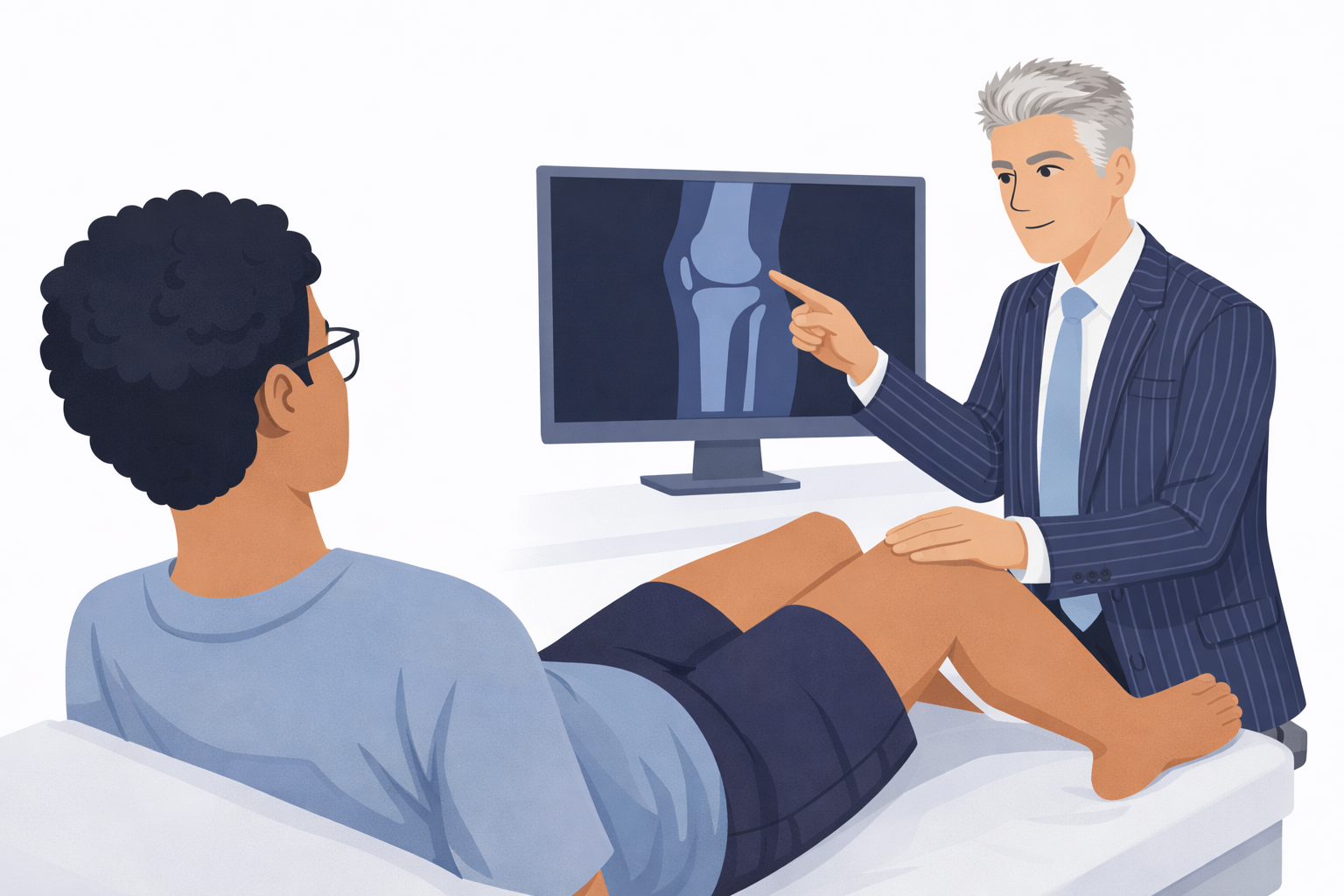
Depending on the anatomical site, ultrasound, X-ray or MRI may help distinguish between:
tendinopathy
enthesopathy
bursitis
calcification
partial tendon tearing
complete tendon tearing
osteoarthritis
another cause of pain.
This can change management.
For example, pain around the outside of the hip may come from GTPS, but it can also be referred from the lumbar spine or arise from the hip joint itself.
Similarly, shoulder pain may represent tendinopathy and bursitis, or a significant structural tendon tear.
The aim is therefore to treat a well-defined clinical problem rather than simply direct radiation at an area that hurts.
Does LDRT Replace Physiotherapy?
No.
This is particularly important for tendon disorders.
LDRT does not restore muscle strength or correct abnormal loading.
If pain improves, rehabilitation may actually become easier.
Someone with GTPS may still benefit from gluteal strengthening.
A patient with Achilles tendinopathy may still require progressive calf loading.
Someone with chronic elbow tendinopathy may continue forearm strengthening and modification of repetitive activities.
The objective is to combine symptom improvement with restoration of movement and function.
How Quickly Might Improvement Occur?
LDRT is not generally an immediate pain-relieving treatment.
Where benefit occurs, improvement can develop gradually over the weeks following treatment and may continue over several months.
Patients may notice:
less pain during activity
greater walking tolerance
improved sleep
easier participation in rehabilitation
reduced tenderness
reduced reliance on pain medication.
A partial response can still be worthwhile.
For somebody with GTPS, sleeping comfortably may represent a major improvement.
For someone with Achilles tendinopathy, the ability to walk further can be more meaningful than complete elimination of tenderness.
Function matters as much as a numerical pain score.
Is LDRT Safe?
The radiation exposure used for these benign conditions is low, but radiation risk is not considered zero.
The anatomical site matters.
Treatment of a peripheral area such as the elbow or ankle exposes different tissues from treatment closer to the shoulder, hip or trunk.
Recent long-term evidence involving almost 4,700 patients treated with LDRT for benign musculoskeletal conditions has been reassuring, particularly for peripheral treatment areas.
Patient age, treatment location and expected clinical benefit all need to be considered.
We discuss this in more detail in our dedicated article on the long-term safety of LDRT.
LDRT for Chronic Tendon Pain and Bursitis at Pinpoint Radiotherapy
At Pinpoint Radiotherapy, chronic tendon and bursal conditions are assessed individually before LDRT is recommended.
Conditions that may be considered include selected cases of:
tennis elbow and golfer’s elbow
Achilles tendinopathy
greater trochanteric pain syndrome
chronic shoulder tendinopathy and bursitis
patellar tendinopathy
other persistent enthesopathies and periarticular pain conditions.
The strength of evidence is not identical for every condition.
We therefore consider the specific diagnosis, duration of symptoms, previous treatment, imaging where appropriate, structural tendon integrity, age and potential radiation risks.
LDRT is not intended to replace appropriate rehabilitation or mechanically repair damaged tissue.
Its potential role is in selected patients with persistent pain despite appropriate conservative treatment, where reducing chronic inflammatory activity may improve comfort, movement and the ability to participate in rehabilitation.
For the right patient, the objective is straightforward.
Less pain, better movement and improved day-to-day function.
Evidence and further reading
Ott OJ, Jeremias C, Gaipl US, et al. The Erlangen Dose Optimization trial for low-dose radiotherapy of benign painful elbow syndrome. Long-term results. Strahlenther Onkol. 2014. PubMed
Niewald M, Hautmann MG, et al. Radiotherapy for benign achillodynia. Long-term results of the Erlangen Dose Optimization Trial. Strahlenther Onkol. 2015. PubMed
Staruch M, Gomez S, Rogers S, et al. Low-dose radiotherapy for greater trochanteric pain syndrome. A single-centre analysis. Strahlenther Onkol. 2024. PubMed
Low Dose Radiotherapy for the Treatment of Inflammatory Periarticular Disorders. American Radium Society Appropriate Use Criteria. 2026. PubMed