A Different Approach to Recurrent Prostate Cancer
After treatment for prostate cancer, some men develop a rising PSA and imaging identifies only a small number of sites where the cancer has returned. This is known as oligometastatic or oligorecurrent prostate cancer.
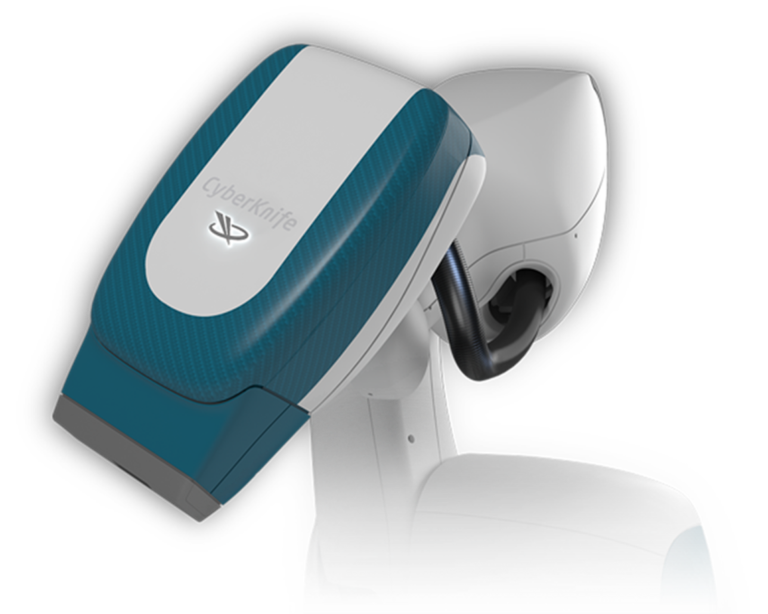
Modern PSMA PET imaging has transformed our ability to identify this situation, often detecting small lymph node or bone metastases at relatively low PSA levels. When only a limited number of sites are visible, stereotactic ablative body radiotherapy, or SABR, can be used to treat each metastasis individually with a highly focused radiation dose.
The aim is not simply to make spots disappear from a scan. Controlling visible metastases may delay further progression and, in selected men, postpone the need to begin or escalate systemic treatment such as androgen deprivation therapy.
What Have the Prostate Cancer Trials Shown?
Several prospective trials have tested this approach.
In the randomised STOMP trial, men with up to three recurrent metastases were allocated to surveillance or metastasis-directed treatment. The median time before androgen deprivation therapy was required was 21 months with metastasis-directed treatment compared with 13 months with surveillance.
The randomised ORIOLE trial produced a similar signal. At six months, progression had occurred in 19% of men treated with SABR compared with 61% managed with observation. Importantly, men in whom all PSMA PET-visible disease was treated were substantially less likely to develop new lesions, highlighting the value of identifying and treating the full extent of visible disease.
These trials established that treating a limited number of prostate cancer metastases can alter the course of the disease for a period of time, rather than simply providing local control of individual lesions.
The TRANSFORM Trial and Five-Year Outcomes
The Australian TRANSFORM trial provides some of the longest prospective data for this approach. It followed 199 men with oligometastatic prostate cancer treated with SABR-based metastasis-directed therapy, making it one of the largest prospective cohorts in this setting. More than three-quarters of participants were hormone-naïve when they entered the study.
The key outcome was treatment escalation-free survival, meaning the patient had not required a new cancer treatment other than further SABR to newly appearing metastatic sites.
At five years, 21.7% of all participants remained free from treatment escalation. Among men who had not previously received hormone therapy, this increased to 25.4%. In other words, approximately one in four hormone-naïve men had avoided the need for systemic treatment escalation five years after entering the study, although some had received further SABR along the way.
The study also helped identify patients less likely to maintain long-term control with SABR alone. Higher PSA, higher-grade prostate cancer and previous androgen deprivation therapy were associated with an earlier need for treatment escalation. Importantly, there were no treatment-related grade 3 or higher adverse events reported.
TRANSFORM does not demonstrate that SABR cures metastatic prostate cancer, and it was not a randomised comparison against immediate hormone therapy. What it does show is that, in a carefully selected group of men, repeated metastasis-directed SABR can produce meaningful periods of disease control and delay the need for additional systemic treatment.
Our Approach to Oligometastatic Prostate Cancer
At Pinpoint Radiotherapy, the decision to use SABR is based on the behaviour of the prostate cancer as a whole rather than simply the number of lesions seen on a scan.
PSA level and doubling time, grade of the original cancer, previous treatments, PSMA PET findings, the location and number of metastases and the interval since the original treatment all help indicate whether metastasis-directed therapy is likely to be worthwhile.
For some men, SABR may allow hormone therapy to be deferred. For others, it may be used alongside systemic treatment or to control a small number of progressing sites while an otherwise effective treatment continues. If new limited sites subsequently emerge, further SABR may sometimes be appropriate.
Dr Patrick Bowden was the senior investigator of the TRANSFORM study, and Dr Paul Conway was a co-author of its five-year analysis. That long-term experience has helped shape the approach at Pinpoint Radiotherapy: use high-quality imaging to understand where the disease is, treat selected sites precisely, and use SABR when doing so has a meaningful chance of delaying the next stage of treatment.
Evidence and further reading
See AW, Conway P, Frydenberg M, et al. Five-year outcomes of fractionated stereotactic body radiotherapy for oligometastatic prostate cancer from the TRANSFORM phase II trial. Int J Cancer. 2024. PubMed PubMed
Ost P, Reynders D, Decaestecker K, et al. Surveillance or Metastasis-Directed Therapy for Oligometastatic Prostate Cancer Recurrence: A Prospective, Randomized, Multicenter Phase II Trial. J Clin Oncol. 2018. PubMed PubMed
Phillips R, Shi WY, Deek M, et al. Outcomes of Observation vs Stereotactic Ablative Radiation for Oligometastatic Prostate Cancer: The ORIOLE Phase 2 Randomized Clinical Trial. JAMA Oncol. 2020. PubMed PubMed
Lievens Y, Guckenberger M, Gomez D, et al. Defining oligometastatic disease from a radiation oncology perspective: an ESTRO-ASTRO consensus document. Radiother Oncol. 2020.