SABR for Early-Stage Lung Cancer
Stereotactic ablative body radiotherapy, or SABR, has become an established treatment for selected patients with early-stage non-small cell lung cancer who are not proceeding with surgery. It delivers a high radiation dose very precisely to a small lung tumour, usually over only a few treatment sessions.
This is particularly valuable because many patients diagnosed with early lung cancer are older or have underlying lung, heart or other medical conditions that make an operation less suitable. SABR provides a non-invasive way of treating the cancer while limiting radiation exposure to the surrounding healthy lung.
The Australian and New Zealand CHISEL trial provided important randomised evidence for this approach. In patients with inoperable peripheral stage I lung cancer, local failure occurred in 14% after SABR compared with 31% after conventional radiotherapy, and two-year overall survival was approximately 77% versus 59%. Longer-term studies have consistently shown local tumour control above 90% for appropriately selected early-stage cancers.
Why Precision Matters in the Lung
Treating a lung tumour presents an additional challenge because the target moves as the patient breathes. Accurate SABR therefore requires more than simply identifying the tumour on a standard CT scan.
Four-dimensional CT imaging can show how the tumour moves through the breathing cycle, allowing the treatment to account for that motion while limiting the amount of surrounding lung included in the radiation field. Depending on the tumour and treatment platform, techniques such as breath hold, respiratory gating or real-time tumour tracking may also be used.
The location of the tumour matters as well. Small peripheral lung cancers can often be treated over three to five sessions, while lesions close to central airways, the oesophagus, heart or chest wall may require a more cautious dose schedule. The aim remains the same: deliver an ablative dose to the cancer while keeping radiation to nearby healthy tissues within safe limits.
SABR for Oligometastatic Disease
SABR also has an important role when cancer has spread but remains limited to a small number of sites.
This can occur in two ways. A patient with lung cancer may have a small number of metastases elsewhere in the body, or a patient with another cancer may develop one or a few metastatic deposits within the lungs. In appropriately selected patients, SABR can be used to treat these individual sites as part of a broader metastasis-directed treatment strategy.
For oligometastatic non-small cell lung cancer, international guidelines support consideration of definitive local treatment when all known sites of disease can be safely treated. This may include the primary lung cancer, involved lymph nodes and a limited number of metastases, alongside appropriate systemic therapy.
SABR may also be useful in oligoprogressive disease, where systemic treatment is controlling most of the cancer but one or a few sites begin to grow. Treating those resistant areas can sometimes allow an otherwise effective systemic treatment to continue for longer before another line of therapy is required.
As with other oligometastatic cancers, the number of lesions is only part of the decision. The pattern and speed of progression, cancer type, location of disease, systemic treatment options and whether all clinically important sites can be treated safely are equally important.
Our Approach to Lung SABR
At Pinpoint Radiotherapy, lung SABR is considered according to both the cancer and the individual patient’s broader clinical situation. For early-stage lung cancer, this includes tumour size and location, PET imaging, lung function, general health and whether surgery is being pursued. For metastatic disease, the overall pattern and behaviour of the cancer becomes equally important.
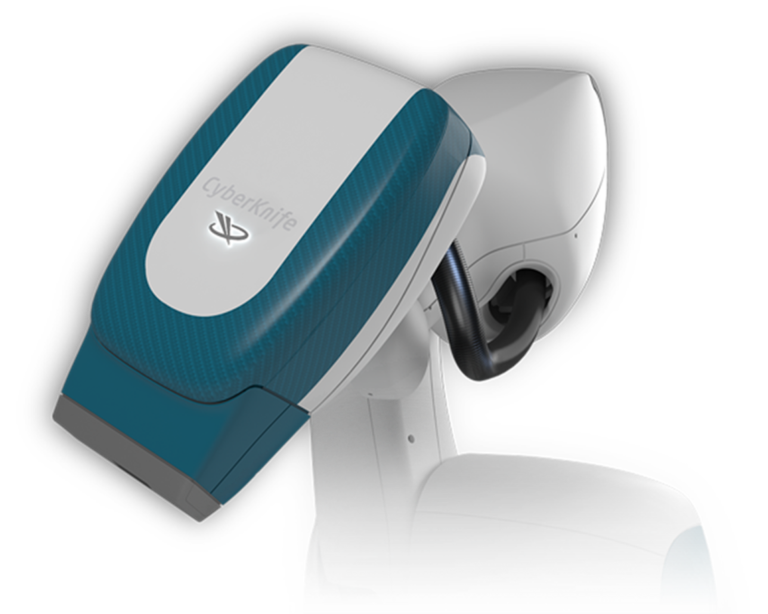
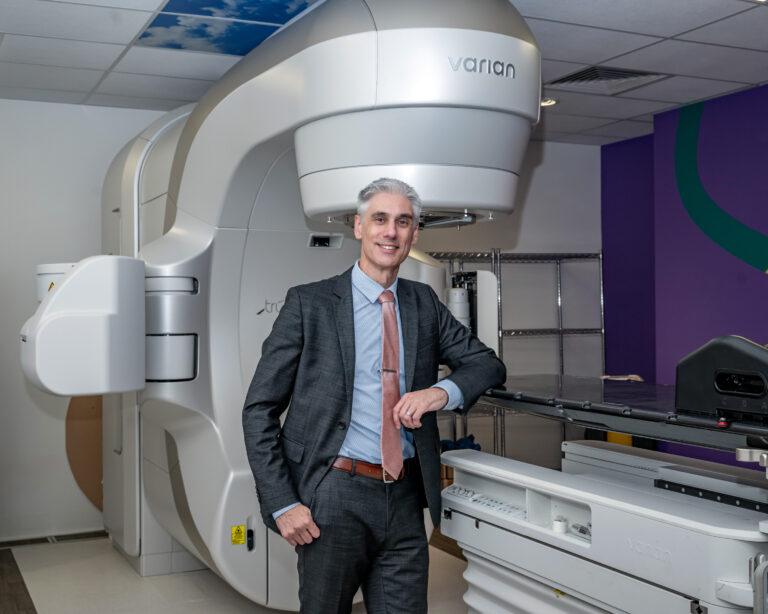
Respiratory motion is assessed carefully during treatment planning. Modern linear accelerators can use sophisticated image guidance and motion-management techniques, while CyberKnife provides another option for selected lung tumours. Its Synchrony system can model respiratory movement and adjust beam targeting as the tumour moves during breathing. In some appropriately visible lung tumours this can be performed without implanted fiducial markers, while other targets may require markers or a different tracking approach.
The technology is chosen according to the tumour rather than the other way around. The objective is to deliver a sufficiently high dose to achieve durable tumour control while minimising unnecessary radiation to normal lung and nearby structures.
For selected patients, lung SABR provides a short, highly focused and non-invasive treatment, whether the goal is controlling an early primary lung cancer or treating a limited number of metastatic sites as part of the broader management of their cancer.
Evidence and further reading
Ball D, Mai GT, Vinod S, et al. Stereotactic ablative radiotherapy versus standard radiotherapy in stage I non-small-cell lung cancer (TROG 09.02 CHISEL). Lancet Oncol. 2019. PubMed PubMed
Timmerman R, Hu C, Michalski JM, et al. Long-term Results of Stereotactic Body Radiation Therapy in Medically Inoperable Stage I Non-Small Cell Lung Cancer. JAMA Oncol. 2018. PubMed PubMed
Iyengar P, All S, Berry MF, et al. Treatment of Oligometastatic Non-Small Cell Lung Cancer: An ASTRO/ESTRO Clinical Practice Guideline. Pract Radiat Oncol. 2023. PubMed PubMed
Akino Y, Shiomi H, Sumida I, et al. Clinical log data analysis for assessing the accuracy of the CyberKnife fiducial-free lung tumor tracking system. Pract Radiat Oncol. 2018. PubMed